Special Report Podcast: Brian Dames - CEO, Eskom
Advertising
15-06-2012
Read : 79 times
Moneyweb
Source
Are the days of big electricity price hikes over?
ALEC HOGG: It’s Thursday June 14 2012 and in this Boardroom Talk special podcast, Brian Dames, the chief executive of Eskom, joins us on a day when financial results were released. I suppose, Brian, we always start off with the headlines and they’re good, you’re clawing your way back to financial stability.
BRIAN DAMES: I think ja, they’re good that’s a fact and we’ve worked hard in making sure that is the case. We’ve been looking at really rebuilding Eskom and I think the company that we have now is something that’s fundamentally different to two years ago.
ALEC HOGG: I guess a couple of big questions for most consumers and business consumers in particular, is the fact of those 25% a year tariff increases that were required, are they now behind us?
BRIAN DAMES: Alec, you know that we have given this very strong financial performance at Eskom and the financial performance comes from obviously the top line, the tariff, the revenue line but also from increasing operational efficiencies in Eskom has led us to actually go to the regulator and change the 25%, the last one, to 16%. That has given a massive benefit back to consumers and we’re comfortable that that does not put Eskom’s financial viability at risk.
ALEC HOGG: So what’s the next increase likely to be?
BRIAN DAMES: We’re still busy in the process of determining that but our view is that going forward we should look at increases over a longer period of time and make sure that these are smoothed in, as we said, over a longer period of time and eventually getting us to increases that is closer to inflation but that will take some time. The key issue for us is what are the choices we’ll be making, are we going to introduce more renewables or more expensive power and all of that will obviously have to be factored into.
ALEC HOGG: You mention more expensive power, the new power that you bring into the grid and we had a fascinating discussion last week with the CEO of Aggreko, the UK company, that’s at 77c a kilowatt, how does that compare with your base costs overall?
BRIAN DAMES: As we announced today, for us to sell electricity on average it costs us 50c. Now, that is our price to the customer, the wholesale customer, that includes all our costs, including our transmission and distribution costs. The 77c only refers to the generation portion, so that 77c is a very clear indication that we’re not a cost reflective tariff because that’s the cheapest alternative. So the comparisons are a cost structure in Eskom including generation, transmission and distribution of 41c, selling price of 50c and a cost structure just on the generation side [UNCLEAR 2:43] of 77c. That gives a sense of the cost of electricity.
ALEC HOGG: It doesn’t seem to make a lot of sense though if you’re selling it at 50c to buy it in at 77c?
BRIAN DAMES: We can do that because we blend that price with a very cheap Eskom cost base and we have to be very conscious of how much of the additional power you mix into that base. But because you have this very, very cost efficient Eskom cost base the consumers see quite a lesser impact but what’s also very clear is that we alone cannot deal with the future energy needs of the country and we would have to see a combination of both Eskom and the private sector to make the necessary investments.
ALEC HOGG: We heard from Aggreko, there have been suggestions from other industries, Mondi, Sappi, Tongaat-Hulett that they would also like to be contributing to the grid. Is this 77c number something that is getting them excited?
BRIAN DAMES: They’re already contributing, actually they’re already part of it, Sappi is part of it, Sasol is part of it and so the current independent power producers are essentially out of that sector and they’ve already made some investments, particularly in co-generation and hence it’s been attractive to them.
ALEC HOGG: Would you ever consider making it very broad, for instance in Australia, where they…you can actually sell into the grid at certain times if you’ve even got solar power on your roof, you know the international examples. Is it feasible in this country?
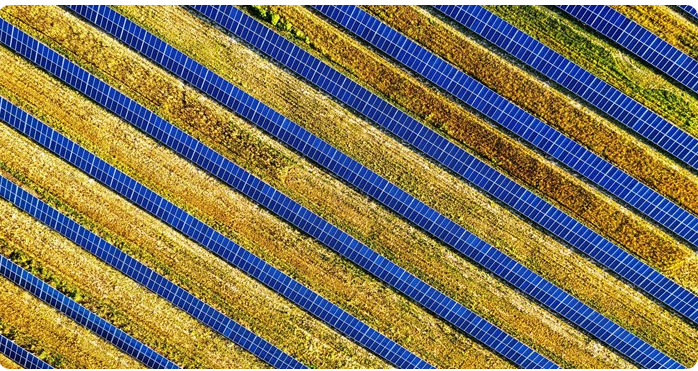
BRIAN DAMES: Our view is that over the next – most probably before this decade is over – that would be feasible because of the prices for solar energy coming down. Interestingly enough, the other day somebody brought a roof tile into my office and that’s got a solar panel in. So as these prices come down it will be – provided households have got the capital to do that- it will be possible. Today in South Africa we’re already seeing buildings being refitted and then the rest would just be a question of the rules from the regulator to allow that.
ALEC HOGG: A roof tile with a solar panel?
BRIAN DAMES: Absolutely and that is being manufactured. So that industry is really growing in leaps and bounds.
ALEC HOGG: It’s an exciting opportunity for many, the whole green energy area, are you seeing the private sector or perhaps entrepreneurs getting more involved?
BRIAN DAMES: Ja, certainly, the Department of Energy has already announced 1400 megawatts of private sector participation. This technology lends itself to project based funding with a lot of entrepreneurs playing a role and the first phase and the second phase of that has already been awarded. A bit more pricey and it’s certainly one of the debates as we move into the next phase of tariff increases because at the end of the day we have to buy that power and pay for it and that cost goes back to the consumer.
ALEC HOGG: On a more immediate issue, are we going to be okay through this winter?
BRIAN DAMES: I get asked the question every winter and my answer has always been if we all save electricity between five and nine, we do our part and if the consumers can do their part then there should be enough. I can give you a sense that in some evenings when it’s very cold we see an increase of over 3500 megawatts from five o’clock to about seven o’clock every night. Now that is…we use, as South Africans, that amount of power, which is equivalent to many of our neighbouring countries’ combined power use. Really our call has been on customers that particularly over the peak period we find ways of saving electricity.
ALEC HOGG: So are they, are they helping?
BRIAN DAMES: We are seeing it. Whenever we put up the power alert at night, when it’s red, the average saving that we see is 261 megawatts. It’s not enough but it’s certainly playing a role and we obviously are working with our large customers, particularly over that period, to also reduce that demand.
ALEC HOGG: Brian, you mentioned in the results today that the sales are up 0.2% as against a projected 1.2%, so one has to ask is this because the economy is under pressure or is it because people are actually trying to help save electricity.
BRIAN DAMES: I think it’s both of those; the economy is under pressure, we have seen that in many sectors. You’ll also recall last year we had some industrial action in some key sectors in the economy that are big users of electricity. Then thirdly we have seen about a 1400 gigawatt hours demand side saving. Eskom runs one of the largest energy efficiency programmes globally and that has contributed, residential and large customers have contributed to the fact that we’ve seen a lower sales number.
ALEC HOGG: It’s a big number. I remember talking to Wayne Samson from Ellies, who’s involved in one of these projects, perhaps you could explain or unpack that for us a little bit, how these efficiency savings projects, where you incentivise the private sector to come along, are working.
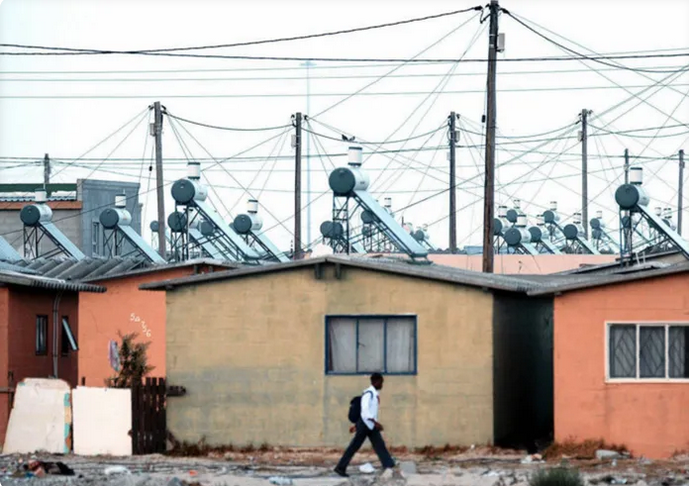
BRIAN DAMES: Ja, we fund the demand side programme out of the tariffs, so included in all of those tariff numbers we spoke about there’s money to invest in energy efficiency. You know that we run a whole range of programmes, one would be the solar water heater rebate programme that is a key part. On the other hand we also invest in the private sector industry, so in the mining industry alone we’ve invested about R1bn in energy efficiency of motors, compressors, pumps. Then we’ve also given a standard offer for companies, we call them ESCos, to go around and find energy efficiency projects like, for instance, the Ellies example. We’re starting something very innovative this year, we’re starting what we call a demand aggregator programme, where people [UNCLEAR 1:50] residential demand and find savings and then sell that back to Eskom. That’s all quite innovative in terms of the programmes we’re running.
ALEC HOGG: Best of all though would be to bring on stream some of these amazing opportunities that there are in Africa. We spoke about it last year and you were quite…a little upbeat at that stage about the Inga Hydropower Project, which could bring another 40 000 megawatts to the grid. Nothing seems to have happened in the last 12 months, what’s stalling it?
BRIAN DAMES: Ja, we remain very excited about the opportunities in the region. Our immediate focus now is projects that are more advanced, certainly Inga is still there, it may have a longer term perspective. There is significant hydro potential on the Zambezi that we think is more near term than Inga but to unleash all of that capacity we also need to invest in transmission lines and certainly from an Eskom perspective I can give you the assurance that we have made quite a bit of progress in the last year in taking those projects to a level of decision making.
ALEC HOGG: Transmission lines, those are the big pylons?
BRIAN DAMES: Absolutely, you have to move the power around over vast distances and so that’s a key part of it.
ALEC HOGG: Brian, we’ve seen Telkom being hard hit by copper cable thieves, the urban legend anyway is that once they’ve wiped out all the copper cable from Telkom, they’ll come after Eskom. Is it an issue, is it a risk factor?
BRIAN DAMES: Ja, it is a risk factor and it’s already been in Eskom. We have a very strong programme with the police and many of the state-owned companies, including Telkom as well, to deal with this issue. We must all understand in South Africa that this is serious, this is sabotage, it’s unacceptable. We have seen government strengthening legislation around that, particularly around the Second Goods Act. What we’re now seeing for instance is steel on our transmission towers, now that is a big risk for us if people start stealing that because it would impact the lines and big cities. So we have strengthened our response in that regard.
ALEC HOGG: How do you strengthen your response?
BRIAN DAMES: Increase in patrols. So we get helicopters, you know that we do live line work and we fly increasing patrols together with the police and put security out over vast distances of transmission lines.
ALEC HOGG: And who is stealing this stuff?
BRIAN DAMES: [Laughing] It’s a problem and…
ALEC HOGG: But who is it? Where is it going to? Where does the copper end up?
BRIAN DAMES: A lot of this is syndicates, a lot of this gets melted, shipped out and then we all buy it back in whatever goods we get. So it is a concern and I know that the police are working quite hard in combatting that.
ALEC HOGG: Well, let’s end up on a good news note, it does look like Eskom is set fair for the near term anyway, we aren’t going to be subjected - if I read you correctly – to another 16% or heaven help us 25% increases into the future. Is that really a summary from the way we can look ahead?
BRIAN DAMES: No, I think the way we can look ahead is one that we’re not yet at cost reflective tariffs and we need to get there. We’ve indicated today that for us to fund [UNCLEAR 5:12] raise a significant amount of debt, we have R182bn of debt alone, ourself, and we have an interest bill of about an average R23bn a year over the next few years. All of that must be paid and so getting to cost reflective tariffs is very important but we’re very cognizant of the impact of that on the poor, the impact of that on the economy and I can give you the assurance we will certainly engage extensively before our decision is finalised.
ALEC HOGG: But presumably a lot of that will be repaid when the new power stations come on line and start selling their product?
BRIAN DAMES: We need to start paying that debt back starting next year [laughing]. So on average for the next five years about R23bn of interest alone needs to be paid back and a lot of this gets paid back over the next 41 years.
ALEC HOGG: And what is the payback period on a Medupi?
BRIAN DAMES: Like I say to you, it depends on the debt that we raise, we’re obviously matching our debt with the life of the assets. So we’ve got long-term assets and so we would want to also match that with long-term debt. Over 60% of our debt is over ten years and, as I’ve said, some of this debt stretches out to 2041.
ALEC HOGG: I hear you but what with the 80bn or 100bn or whatever the number is now for Medupi, how long will it take for Medupi’s own product, sold into the grid, to repay that?
BRIAN DAMES: We pool the debt in Eskom, so we obviously have the World Bank loan that is a long-term loan that’s a big part of the Medupi funding. That’s a 28 year agreement, so we would have to pay it back over that period. The rest of the funding we pool and therefore we don’t look at specific project type debt, we would pool that funding and make sure we match it and have as long a tenure as possible.
ALEC HOGG: So you don’t actually work like in the private sector if you’re going to put up a plant you need a repayment period to base it on. Being a, I suppose, a state- owned utility there are different priorities.
BRIAN DAMES: Ja, from our perspective we would want…in the private sector a lot of that debt has a ten to 15 year tenure, we would like to extend it for as long as possible. If you can do that you can raise funding at lower levels.
ALEC HOGG: And keep expanding.
BRIAN DAMES: Ja and then keep expanding and we’ve successfully been able to do that.
ALEC HOGG: Brian Dames is the chief executive of Eskom.
Recent News
Here are recent news articles from the Building and Construction Industry.
Have you signed up for your free copy yet?