Rethinking flooring from the inside out
Advertising
28-05-2026
Read : 193 times
The Content Engine
Source
By Carl White
I have spent much of my work focused on one persistent issue in construction: excess moisture movement through concrete slabs and its impact on flooring performance. In practice, it remains one of the biggest risks to flooring systems, often leading to failures such as buckling, cupping, warping, blistering, bubbling, and delamination.
When high moisture test results are recorded, the consequences are immediate and costly. Projects are either delayed for weeks to allow additional drying time, or contractors are forced to install moisture mitigation systems that require additional floor preparation, specialised products, and increased labour. Either option has a direct impact on cost and programme. As we all know, time is money.
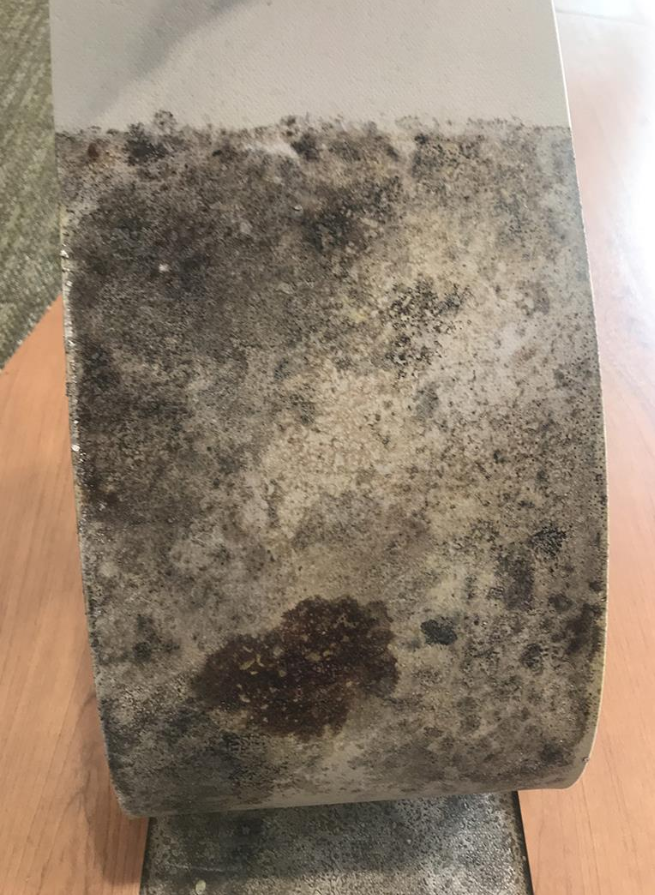
It also poses a health risk. The South African National Department of Health identifies damp indoor environments as a major contributor to poor indoor air quality. Excess moisture encourages the growth of mould, fungi, bacteria, and dust mites, all of which are linked to respiratory illness, asthma, and allergic reactions.
Understanding where the problem begins
In most buildings, particularly multi-story developments, concrete slabs-on-grade are finished with a range of flooring systems selected for function, durability, and aesthetics. These typically include carpet, luxury vinyl tile (LVT), vinyl composition tile (VCT), epoxy coatings, and painted finishes. These systems are widely used across commercial, educational, medical, retail, and residential environments due to their versatility and ability to perform under high-traffic conditions.
However, the performance of these finishes ultimately depends on what happens beneath them.
The core issue is moisture movement through the concrete slab to the interface between the concrete and the applied adhesives, coatings, or flooring systems. Moisture may originate from within the slab itself as part of the natural hydration process, or from external sources beneath or adjacent to the slab.
Concrete must retain moisture to continue hydrating and developing strength and durability. However, premature attempts to force a slab to “dry out” can compromise long-term performance. In conditioned environments such as HVAC-controlled buildings, trapped moisture may later migrate to the surface, resulting in adhesive re-emulsification, flooring bond failure, and coating deterioration.
Moisture pathways in slabs-on-grade
For slabs-on-grade construction, moisture may originate from the ground beneath the slab, migrate through the base material, and move upward through the concrete itself. This is often compounded by poor drainage conditions or other site-related moisture issues.
Additional moisture intrusion can also occur from adjacent sources such as malfunctioning water stops, wind-driven rain, plumbing leaks, or other environmental exposures.
Within the building environment, temperature and humidity differentials can further contribute to condensation at the slab and flooring interface. Even routine cleaning practices can introduce surface moisture that interferes with adhesive performance. One practical field method of assessment is the plastic sheet test, where the slab is dried with forced air for approximately 24 hours and then covered with plastic for 72 hours to observe condensation beneath the sheet.
The science of curing versus drying
It is important to understand that curing and drying are two distinct processes.
Curing involves retaining moisture within the slab so that cementitious materials can continue their hydration reaction, enabling the concrete to develop strength and durability. Drying, on the other hand, refers to reducing moisture content to acceptable levels prior to installing adhesives, coatings, or flooring systems. Proper balance between these processes is essential for both concrete performance and successful flooring installation.
Within concrete, mix water exists in several forms during hydration and drying. Bleed water rises to the surface and exits during the initial setting phase. Evaporable water remains within the slab after setting and gradually leaves over time, typically between 1 and 60 days or longer depending on conditions and slab thickness. Non-evaporable water, or bound water, becomes chemically incorporated into the cement matrix. Reaction water is consumed during hydration and directly contributes to strength and durability.
Drying behaviour is strongly influenced by the water-to-cement (w/b) ratio. Higher ratios introduce more excess water, leading to extended drying times and increased moisture-related risks. In 100 mm slabs, mixes with a w/b ratio of 0.60 exhibit the highest initial moisture vapour transmission rates, followed by 0.50 and 0.40 mixes. Drying rates decrease significantly over time as moisture migrates out of the slab. Lower w/b ratio concretes generally reach acceptable moisture levels more quickly. These findings are based on testing conducted at 50% relative humidity (RH) and 23°C, with no external moisture sources present.
When drying is no longer enough
When moisture test results exceed acceptable thresholds, there are typically two options.
The first is to wait for additional drying time, which can significantly delay construction programmes. A second option is to install a moisture mitigation system, which may reduce delays but introduces additional floor preparation requirements, specialised products, increased labour, and higher overall cost. In both cases, the impact on project time and budget is substantial.
The underlying reason for this challenge is that concrete is inherently permeable. It is mixed with more water than is required for initial hydration to allow it to be placed, compacted, and finished. As it cures and dries, excess water exits through interconnected bleed channels, capillaries, and pores within the cement matrix. These pathways remain within hardened concrete and can later act as routes for moisture and contaminant movement.
A shift toward nano-engineered solutions
This is where post-set spray-applied colloidal silica presents a significant advancement. It is an engineered nanotechnology designed to reduce permeability and improve long-term slab performance.
When applied within 24 hours of placement, it can provide curing benefits comparable to traditional 28-day moist curing, particularly in terms of compressive strength development and reduced drying shrinkage. This technology has already been used on more than 50 million square metres of concrete worldwide and continues to gain adoption.
Colloidal silica is silicon dioxide in nano-scale form. Its extremely small particle size allows it to penetrate deeply into the interconnected pore structure of concrete, where it interacts within the cement matrix.
Once applied, it fills the capillary void system after formation, refining and densifying the internal structure. The reaction products formed are compatible with those naturally present in concrete, supporting long-term durability. It can be applied to both new and existing concrete and is designed as a one-time treatment intended to last for the service life of the slab.
As particle size decreases from conventional to high-performance and nano-engineered concrete systems, specific surface area increases dramatically. This increase enhances chemical interaction within the cement matrix, improving strength development, durability, and overall performance at a fundamental level.
Applied within 24 hours of placement, post-set spray-applied colloidal silica fills the capillary void structure as it forms, permanently limiting excessive moisture movement while still supporting internal curing. In effect, it delivers many of the benefits associated with 28-day moist curing through a single application designed to last for the life of the concrete.
This SCP technology has now been used on more than 50 million square metres of new and existing slabs globally.
White is Managing Director of Spraylock Africa, which is committed to future proofing your concrete today!
For more information please contact:
David Poggiolini
Debbie Poggiolini
Recent News
Here are recent news articles from the Building and Construction Industry.
Have you signed up for your free copy yet?