R6bn Whetstone Business Park takes off near King Shaka International
Advertising
24-01-2023
Read : 593 times
Moneyweb
Source
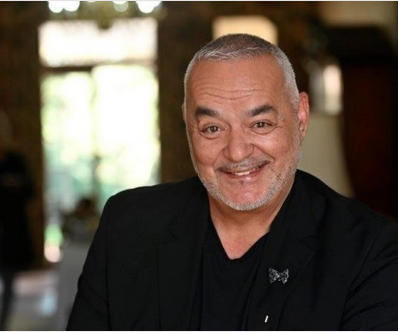
Gavin Strydom, co-developer and partner of the 815 000 square metre commercial and industrial property project, says the new park forms a key part of the broader Dube aerotropolis development precinct, which he believes ‘is the future of Durban’.
The opening of King Shaka International Airport and Dube TradePort in 2010 has spurred a property development boom on the KZN North Coast.
One of the latest commercial and industrial property developments taking off is the R6 billion Whetstone Business Park project, a stone’s throw from the airport and the Dube TradePort Special Economic Zone (SEZ).
On this episode of The Property Pod – South Africa’s top property industry podcast, brought to you by Moneyweb – we speak to developer and partner in the Whetstone project Gavin Strydom, who tells us more about the development and how it fits into the greater aerotropolis or airport city precinct, north of Durban.
Strydom, who is one of KZN’s leading black construction and property entrepreneurs, envisaged a mega development on land near the new airport when he and his partners first bought the land before the airport was even built.
Highlights of his interview appear below. You can also listen to the full podcast above or download it from iono, Spotify or Apple Podcasts.


Highlights
“[It’s] quite an interesting story … Many years ago, back in 2008 or so – and that was prior to the establishment of the King Shaka International Airport – Acsa [Airports Company of South Africa] at that point called for expressions of interest which involved the design of the airport, the construction of the airport, and the facilities management of the airport.”
“Eventually two consortiums were shortlisted by Acsa for consideration. Since each tender was to be compensated for the design component of the tender, Acsa wanted to own the two design proposals upfront, which I thought was pretty clever. So they shortlisted about nine expressions of interest down to two, and the two of us were paid for our designs. I was part of the Grinaker consortium, and I was also the B-BBEE partner at the time.”
“Unfortunately we did not win the tender, but because of my intimate knowledge of the site-development plans and the road layouts, I became interested in where the proposed airport drive was to intersect with the R102, which is a regional road that connects a whole lot of little towns like Tongaat, Verulam and Phoenix north of Durban.”
“I thought if I discovered where that intersection was going to be, that piece of land next door might end up being quite a valuable piece of land eventually.”
“I recall driving around on a Sunday with my wife and my sister. It was a Sunday afternoon and in our little car – it was many years ago – we had all these plans, etc. I eventually interpolated from these plans and from these site development plans where this intersection was going to be. It was a bit of guesswork at the time, but educated guesswork.”
“And then, when I felt I’d identified the position, I immediately looked across the road and said to my sister – she worked for me at the time – please Barbara, go along and visit this farmer tomorrow, Monday, and see if he has perhaps an interest in selling the farm …”
“Of course, that very Monday I called the owner and made his acquaintance and said to him, ‘I’m interested in buying a farm’. To cut a long story short, I thought I would double the price of the value of farmland at the time. And yes, he was a seasoned chartered accountant and when I gave him the value, he asked me if I was feeling well, saying ‘Is something wrong with you?’ – or something like that.”
Love of property
“I said to him, no, I just love this property. Eventually he asked me to place the offer in writing, which I did. Of course he accepted the offer, and the rest is history.
“I told my partners at the time if the airport did not materialise I would build some low-income housing, perhaps, and at least get our money back. I might not have made extensive profits – or any profit for that matter – but at least we’d get our money back.”
“But I said to my partners if the airport did go ahead, we would stand in good stead with this farm. It was about 330 000m2, 33 hectares, at the time.”
“Six months later the airport was announced, the ‘go ahead’ was given, and I remember receiving a call from the owner – quite an elderly gentleman – who said to me: ‘Gavin, my boy, I think you have vision. I must congratulate you.’ So that’s how the land eventually was put into our portfolio.”
Who are your partners in the development?
“I’ve got three partners and we are all three equal partners. The first is Yunus Akoo, very well known. He’s the owner of [the] Mercedes-Benz and all the franchises out in KZN, and also many in South Africa.”
“The other, Rafik Mohamed, is the owner of Pro Roof Steel and numerous other companies. It’s just the three of us and we’ve been together now for 15 or 16 years, and all goes well in this partnership.”
“We’ve grown our land footprint [for the development], so that farm that I introduced the conversation with was the first piece of land that we bought. We call that phase one. We’ve subsequently bought three other neighbouring properties over the period.”
“So we have a total of four farms, and we’ve identified them as four phases. But altogether these land footprints, the parent property land footprints, come in at about 815 000m2. We are hoping to reach a million square metres … So we are still in the market to buy something else to get to a million square metres, but currently we are sitting on about 815 000m2.”
“Generally, I sacrifice about 10% to 30% of the land footprint for roads and pavements and landscaping and retaining structures and stuff like that. So generally, of the 815 000 m2 we’ll probably harvest about 600 000m2 of platform, which effectively will give me about 600 000m2 of bulk, and this will translate to a total development value of about R6.6 billion.”
Rollout
“[For] phase one, the infrastructure and bulk services are all in already. The roads are all in, the platforms are all cut. It’s 100% done.”
“Phase two, the infrastructure and platforms are about 60% done, and we are still to develop open ground on phase three and phase four.”
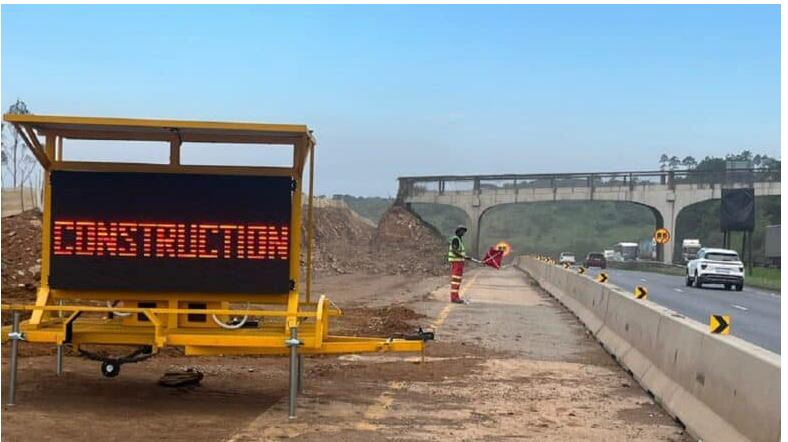
“So currently we are working on phase one and phase two, which effectively takes us up to about 500 000m2. So we’ve got a very, very big land footprint that we are working on currently. We have massive yellow plant, massive, massive dump trucks and the like on phase two at the moment. So there’s a ton of activity that’s happening on site at the moment.”
The development is on one of the closest and biggest pieces of privately-owned land next to the airport and SEZ and is part of the greater Dube aerotropolis precinct. How important is this aspect, the aerotropolis concept, for your development and its future?
“Very, very important …
“Being next to the airport and within the aerotropolis, obviously the airport is a national key point, so we immediately benefit out of the security measures and things like that.”
“I’ll give an example. When we had the riots [in July 2021] the airport was heavily secured by the national government, the local government and [had] a major presence of police and army to maintain and keep safe this national key point.
“So, being right next door, we benefit out of all of that spillover of security.”
“Another very important thing is that the road network around King Shaka, especially prior to the World Cup, was all upgraded – the airport drive, the R102, the N2.
“So we enjoy the brand new, beautiful, wide-berth road network … And with that comes some nice infrastructure. I can’t say all infrastructure is beautiful. We do suffer with sewer issues down in Durban, so I have to exclude that one as being ‘super duper’, but every other part of the infrastructure around the airport is 100%. So yes, we benefit out of all of that type of element.”
“The aerotropolis is the future of Durban. It’s a massive, massive, massive precinct that will be bigger than Umhlanga. It will have shopping centres, universities, schools, residential components, a lot of education facilities, a lot of warehousing, and retail.”
“So it’s a whole city of its own. And that is where everybody will ultimately be directed going forward. And so to me it’s the future of Durban – and we are the first [private property developer] to develop in this precinct.
“In fact, the [KZN MEC] of economic development said to me sometime last year that he’d like to actually go to the media and say to the people, ‘Hey, here’s Gavin, he’s the first to develop in the aerotropolis in the hope that he would draw other interested parties to come by and grow the precinct’. So I believe it’s the future of Durban and couldn’t be a better place to be.”
How has interest been in the development? Have you secured investors?
“Yes, we do have interest. I’ll probably mention some of the bigger ones. We’ve secured the Boxer Cash & Carry distribution centre [DC]. So Boxer has come along and they’ve taken up about 82 000m2 of platform, so it’s quite a huge development and we are very proud to have that successful entity within our precinct.”
“We also have Frimax Chips, the guys who make the corn chips, etc. They’ve also purchased an 80 000m2 site. So those developments are going to be massive, just the two of them on their own. [There are] many other smaller ones, 30 000m2 purchases, 20 000m2, 10 000m2.
“We’ve also got a Shell petroport – this is going to be something special. It’s going to be sited on a 12 000m2 piece of land.”
“We’ve got seven islands. We’ve got two drive-throughs. So you come along and on the one wing there’s a drive-through and on the other wing there’s another drive-through. And we’ve got truck stops and tyre-fitment centres and mechanical repair shops all on this 12 000m2 footprint in this petroport.”
“Sort of a one-stop shop if you are coming along to get your car washed, get your car serviced, all of that kind of stuff. It is also designed for the future in terms of charging stations for electric vehicles. So we are quite excited about this petroport that will be a nice go-to place in this precinct.”
“My expected completion date is round about 2027, give or take a bit of rain, weather, difficult conditions. But yes, 2027 is what I’m aiming for.”
Before you go, tell us who is Gavin Strydom? How did you get into property? I understand, as I mentioned in the intro, that you are a self-made construction and now property entrepreneur, and one of the most successful black property moguls in KZN?
“I was schooled in KZN. I also studied at the University of Natal. At the time that’s what it was called. I read a degree in quantity surveying at Natal University, and I also have a project-management qualification.”
“I worked in the construction industry immediately after university. I worked for Hulsen Morgan and Verbaan [HMV], which was quite a big entity at the time, for about five years. I then also moved on to JT Ross, and spent about five years at JT Ross … Of course, at HMV I always had an issue with my directors – [that] we would build these beautiful buildings on the beachfront.
“We built most of the high-rise buildings on the beachfront and I would always say to my directors, “We build these beautiful buildings, but when are we going to keep the key?”
“I just had that hunger, that thirst to keep the key. My directors then just did not have that desire. Obviously there was enough money to be made. At the time, 20 or 30 years ago, our markups in construction were like 15%, compared to today, which is down at 4%, 5%. So at 15% there was enough money rolling through the tills so there was no need, I suppose, for the directors then to be concerned about keeping the key. But I just had this desire to keep the key.”
Read: Guess where SA’s fastest growing wealth market is? [June 2019]
“Eventually I got fed up with all these companies and said to my dad, who operated a very small building company in Pietermaritzburg: “Dad, I was part of the success of these companies. I helped to develop these companies and, if I could do that in these companies, surely, I can do it for your little company?” His company at the time was called Edstan, and is still called Edstan.”
“I convinced my dad to come from Pietermaritzburg to Durban, and I said: “Come, let me see what I can do with your company.” So we ran along with this construction company and opened up a small development division, and eventually it just grew and grew and grew. My dad’s end product was phenomenal – the quality, the whole concept of delivery ‘on time and within budget’.
“So we had very good people like Yunus [Akoo], whom my dad used to work for. My dad introduced me to Yunus. I didn’t make that connection myself. They were impressed. Eventually we did work and work, and Yunus was impressed and eventually became my partner in development. From that point, when Yunus came on board, it grew exponentially to the point where we are now.”
“So yes, a very nice journey delivering a good product, impressing people for the right reason. And yes, success down the line.”
Recent News
Here are recent news articles from the Building and Construction Industry.
Have you signed up for your free copy yet?