R410 billion and 19 years later: Eskom’s megaprojects to end load-shedding remain unfinished
Advertising
07-09-2026
Read : 6 times
My Broadband
Source
After 19 years, Eskom’s two largest coal-fired power stations, Kusile and Medupi, remain technically incomplete, lacking critical systems and requiring significant remedial work.
Originally designed to solve the country’s load-shedding crisis, construction of both plants was plagued by delays, with an estimated combined cost of over R410 billion borne by South African taxpayers.
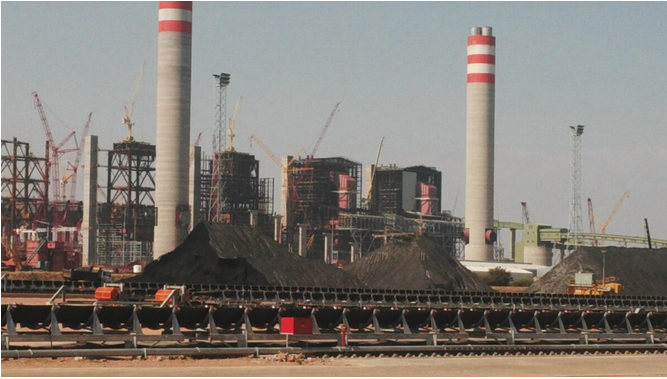
Kusile and Medupi were the largest megaprojects commissioned by the South African government since 1994. The two stations have six generating units each, with a combined output of 9,600MW.
Eskom now only expects to finalise Kusile’s close-out in the 2028 financial year, with additional work at the plant still pencilled in.
Located in Mpumalanga, Kusile, like its sister plant, Medupi in Limpopo, was commissioned after South Africa experienced its first load-shedding 19 years ago.
Eskom had warned the government that demand would outstrip its generating capacity by 2007–2008, but it was not heeded. This was compounded by a failure in political leadership.
On paper, the ANC-led government said it wanted to open the energy sector to private players. However, due to conflicting opinions within the party, it never followed through.
Only once the warning had crystallised into a full-blown crisis did the government act, and two massive coal-fired power stations were commissioned to augment Eskom’s aged fleet.
Kusile suffered from prolonged delays in its construction, which began in 2008. Eskom said in its 2010 annual results that the station was on track to be finalised by 2017.
Its original budget, attached to its nine-year construction timeline, was R121 billion. Eskom was forced to extend the deadline by a year after poor contractor performance slowed the endeavour.
The utility was eventually forced to admit serious design flaws, contractual problems, and systemic overpayments for services that had considerably inflated the original budget.
Major delays stemmed from the mid-project replacement of the plant’s boilers, as Mitsubishi Heavy Industries took over from Hitachi.
Kusile’s original boiler plan was flawed because exit temperatures exceeded the design specifications by 150°C. To compensate for the flaw, Kusile’s boiler towers would have to be made taller.
Medupi was also affected by this massive design flaw. It increased the budgets of both power stations. Kusile’s ballooned to R161.4 billion, while Medupi’s went from R80 billion to R145 billion.
Medupi still missing R41.7 billion anti-pollution system
All of Kusile’s generating units were synchronised in 2025, finally achieving full commercial operation after 17 years of construction.
Despite this, the power station remains technically unfinished, according to the utility’s latest financial results. Remedial work at the station is only on track to be completed by 2028.
At the same time, Medupi still requires the addition of its flue-gas desulphurisation (FGD) system, which it estimated would cost an additional R41.7 billion to complete.
FGD systems remove sulphur dioxide from exhaust gases before they leave the smokestack of power stations. They have the potential to remove 90% of the harmful gases from exhaust fumes.
While Kusile’s FGD technology was built into the power plant during the construction process, Medupi was permitted to retrofit its own FGD within six years of each unit’s commissioning.
Eskom said that Medupi’s FGD system would only be completed by June 2027. It admitted that this deadline may not be reached, potentially breaching a R60 billion loan agreement with the World Bank.
“The delays in completing the Medupi flue-gas desulphurisation plant by June 2027 may result in the early settlement or prepayment of certain related funding arrangements,” Eskom said.
“The group and company are continuing discussions with the relevant lender regarding an extension of the existing waivers.”
Eskom recently submitted an updated cost-benefit analysis to the Department of Forestry, Fisheries and the Environment.
The analysis said that the costs of adding the FGD system to Medupi would outweigh the limited health benefits it would provide to South Africans.
Despite this, Eskom must continue to complete the system, as its loan agreement with the World Bank included promises to use technologies at Medupi that would reduce future carbon emissions.
“The intention is to ensure that carbon emissions peak during 2020 to 2025, reaching a plateau for a decade and then begin declining thereafter,” the utility said in 2010.
As of 2026, Medupi’s final budget stood at R176.6 billion, reflecting the maximum final budget indicated by Eskom in 2021 and the additional cost of the FGD system.
Kusile’s final cost by 2026 was estimated to be R233.4 billion. This brings the final cost of both power stations to R410 billion, with construction still taking place 19 years after ground was first broken.
Recent News
Here are recent news articles from the Building and Construction Industry.
Have you signed up for your free copy yet?