Pothole, signal repairs halted as CoJ liquidity concerns mount
Advertising
24-06-2026
Read : 5 times
Moneyweb
Source
First it was lights, now it’s the roads. The city is again under pressure to account for its dismissal financial showing, despite denials that it’s near insolvent.
Johannesburg’s member of the mayoral committee for Transport, Kenny Kunene, has broken ranks amid heightened concerns over the city’s finances, warning that critical service delivery across the metro is under immense strain “due to systemic liquidity challenges”.
He says the ongoing fiscal pressures impacting the City of Johannesburg (CoJ) have escalated into an unprecedented operational emergency, resulting in the suspension of refuelling services for the Johannesburg Roads Agency (JRA) fleet.
It’s understood that the indefinite suspension took effect on 15 June 2026.
“Because the JRA fleet cannot operate, field teams are effectively grounded,” Kunene said in a statement on Tuesday.
“This directly compromises the City of Johannesburg’s ability to execute routine and emergency road infrastructure maintenance across the city’s network.”
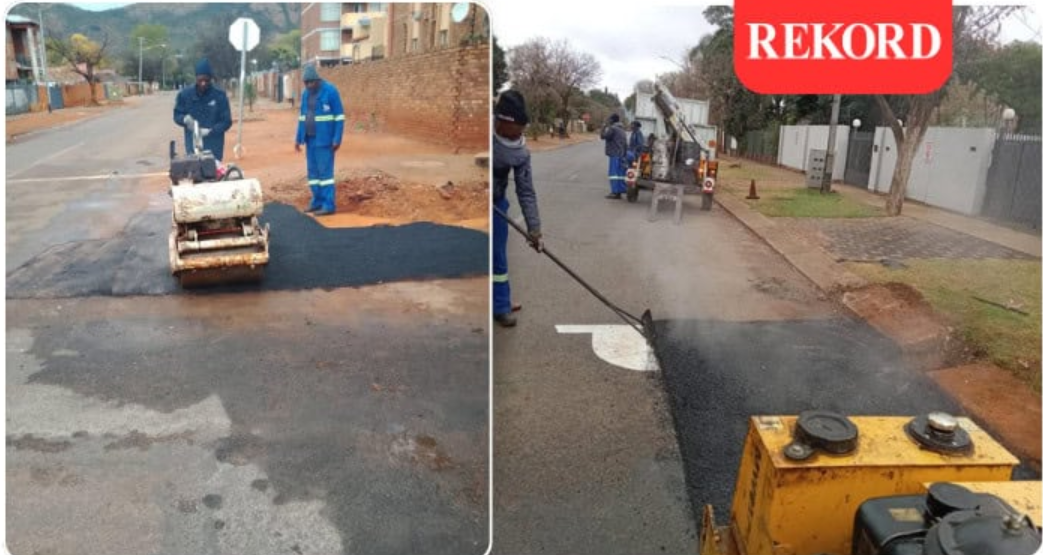
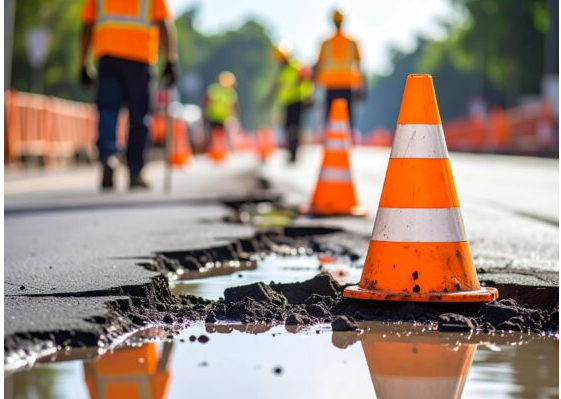
The suspension of operations includes, but is not limited to, pothole repairs, traffic signal maintenance, emergency stormwater and road clearing, as well as bridge and infrastructure inspections.
“The financial and liquidity challenges facing the City of Johannesburg has moved from balancing books to the daily reality on our streets,” Kunene added.
Kunene has called on the city’s finance department and executive leadership, including Mayor Dada Morero, to find an immediate resolution to the metro’s financial crisis.
The remarks come as the Joburg city council is expected to sit on 24 and 25 June to table interventions to reduce unauthorised, irregular, fruitless and wasteful expenditure. The plan is likely to be a make-or-break for the city’s July equitable share allocation from National Treasury.
Revenue crunch
Part of what has contributed to the CoJ’s financial distress is a revenue crunch caused by under-collection at some of its entities, including the electricity distributor City Power.
The utility has, in turn, struggled to keep up with its financial obligations to supplier Eskom.
As of 11 June 2026, the city owes Eskom a historic debt of more than R5.2 billion (comprising R2.7 billion on the current account and a R2.5 billion balance from a court-enforced settlement arrangement).
Despite interventions by Electricity and Energy Minister Kgosientsho Ramokgopa, the city’s failure to meet its debt obligations to Eskom has led the state-owned power utility to reinstate the Promotion of Administrative Justice Act (Paja) process.
The Paja notice, first issued in May, opens the process to public consultation before Eskom can proceed with potential power interruptions or disconnections across the metro.
In addition to the suspension of road maintenance, this means Joburg residents and businesses have also not escaped Eskom’s threats of power cuts in the city.
Already under close scrutiny
While Morero has repeatedly denied that the city is near insolvent, National Treasury is said to be sceptical of its reassurances that finances are being brought under control, and is closely scrutinising the municipality’s accounts.
A senior source inside the country’s fiscal policy engine room has told Moneyweb that Treasury officials are reviewing the city’s finances with a fine-tooth comb amid ongoing concerns about financial mismanagement and poor governance.
Earlier this year, Treasury put CoJ on terms over an “unaffordable” wage agreement with the South African Municipal Workers’ Union (Samwu), worth a hefty R10.3 billion over two years.
This was compounded by earlier warnings about Morero’s alleged failure to prevent, investigate, or even attempt to recover billions in wasted money through unauthorised, irregular, fruitless and wasteful expenditure.
While Joburg recently presented what it claims is a funded budget to the city council, some at Treasury say they are yet to see a funding plan.
Technical discussions are ongoing between Treasury and the city’s finance officials.
“There are ongoing engagements between Treasury officials and City of Joburg finance officials in relation to whether or not their budget is funded, the underlying assumptions around the wage deal, the collection rates, whether their projections are realistic and whether the collection rate is even achievable. There are a lot of concerns around that,” the closely placed source said.
As part of efforts to clean up the city’s finances, Finance Minister Enoch Godongwana threatened to slash the metro’s funding further if it failed to withdraw from the politically facilitated agreement with Samwu.
But the city put itself back on the collision course with Treasury when Morero announced he would push ahead with the deal to manage a fallout with municipal workers.
“They have been given conditionalities; they’ve been given a warning to meet certain milestones. If they meet the milestones, then the funding won’t be withheld, but if they fail to do so, then Treasury has a right to proceed [with the threats to pull funding],” the source added.
“Unless they can produce a funding plan, within their baseline, that shows the budget is funded and that they can afford this [the wage agreement] then they have an unfunded budget.”
“The consequences of not having a proper budget can go all the way to administration and nothing is off the table,” the source also warned.
A “funded budget” under the Municipal Finance Management Act is a municipal budget in which realistically anticipated revenues fully cover projected expenditure.
The upcoming council meeting is also expected to give Treasury a signal on its next move.
Moneyweb has contacted the city for comment, and this story will be updated once we receive a response. However, more details are expected to be revealed following the council meeting.
Recent News
Here are recent news articles from the Building and Construction Industry.
Have you signed up for your free copy yet?