Pothole-riddled roads exceed lifespans and require resurfacing
Advertising
28-01-2026
Read : 11 times
Pretoria Rekord
Source
According to the metro, once roads exceed their intended lifespan, deterioration accelerates rapidly, resulting in repeated pothole formation even after pothole repairs.
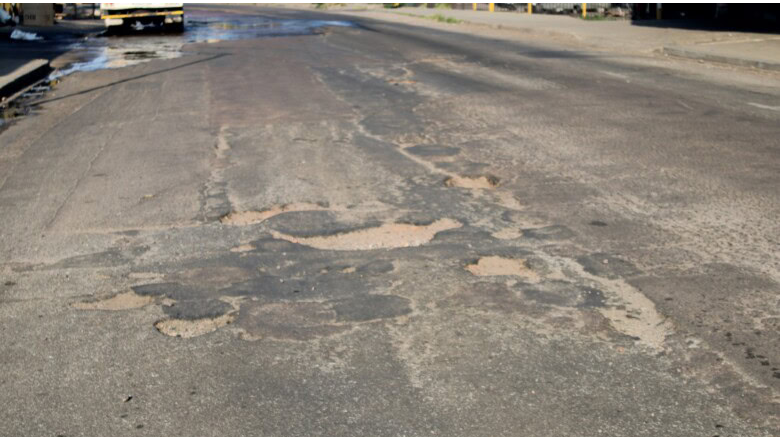
Ageing road infrastructure in the east of Pretoria fuels the growing pothole crisis, with the Tshwane metro confirming that Silverlakes Road and several surrounding routes have reached the end of their design lifespan.
According to the metro, once roads exceed their intended lifespan, deterioration accelerates rapidly, resulting in repeated pothole formation even after pothole repairs.
This has become increasingly evident in several areas in Pretoria, including Silver Lakes, Moreleta Park, Garsfontein, Silverton, Lynwood and Equestria, where motorists report worsening conditions on key routes.
The lifespan of arterial roads varies significantly, typically ranging from 10 to 30 years, depending heavily on traffic volume, climate, and construction quality, but requires extensive resurfacing and maintenance.
Residential roads may last 15–20 years, while heavily used highways can require replacement sooner, often requiring sealing every 3–5 years to extend life and prevent damage from water and oxidation.
Residents say the impact of ageing roads is visible across the area, with scores of potholes forming on Silverlakes Road, Libertas Avenue, Furrow Road, Willow Road, De Villebois Mareuil Drive, Dam Road, Olympus Road, and Rossouw Street. In many cases, recently patched sections have already failed.
On Rossouw Street near Murrayfield, next to the N4, two new potholes have formed at a site damaged by a major pipe leak in 2025, with further road potholes extending towards the Willows Shopping Centre.
Metro spokesperson Lindela Mashigo said roads should ideally be resurfaced every 10 years to maintain structural integrity and extend their lifespan.
“However, financial pressures in recent years have made it difficult for the city to maintain this resurfacing cycle. As a result, there has been an increased reliance on interim repairs,” Mashigo said.
Motorist Hubert de Wet described the condition of Silverlakes Road as ‘dangerous’, particularly given the high traffic volumes.
“The road is heavily used by learner transport and school traffic,” he said. “Some of the potholes are so large I can compare them to swimming pools. Many of them were patched before the rainy season, but now they’ve reopened.”
A stretch of Silverlakes Road between Ridge and Graham roads is reportedly riddled with more than 30 potholes, creating hazardous conditions for motorists and pedestrians alike.
De Wet added that the situation is especially worrying because Silverlakes Road serves as a main access route to Hazeldean Curro Primary and Secondary Schools, where traffic volumes have increased following the reopening of schools.
Residents have warned that without urgent, long-term rehabilitation, the deteriorating roads pose a serious risk to road users and learner safety.
Mashigo acknowledged residents’ concerns, explaining that roads in the area now require extensive rehabilitation rather than routine patching.
“Silverlakes Road and several surrounding roads have reached the end of their design lifespan and require more comprehensive reconstruction,” he said.
“In the interim, pothole repairs are carried out as defects arise to maintain safety and accessibility, while longer-term reconstruction interventions are prioritised as part of the city’s broader roads renewal planning.”
Mashigo added that despite financial constraints affecting resurfacing programmes, the city continues to address reported defects to keep roads functional while working towards more sustainable solutions.
He said pothole repairs on municipal roads are prioritised based on reported defects, logged reference numbers and backlog assessments, noting that heavy rainfall and increased traffic volumes accelerate deterioration, particularly on ageing roads.
Mashigo said resurfacing programmes on key routes have begun and will continue as funding allows, alongside ongoing maintenance interventions.
“These efforts form part of a long-term approach to restore road infrastructure and provide safer, more reliable transport corridors for all road users,” he said.
Addressing concerns about Rossouw Street near the N4, Mashigo explained that the reappearance of potholes at the site of the 2025 pipe leak may be linked to subsurface conditions, including moisture levels that affect compaction.
“Once Water and Sanitation completes backfilling, a job card is issued to the regional roads maintenance team to reinstate the surface,” Mashigo said. “Final resurfacing is undertaken once conditions are suitable to ensure durability and compliance with engineering standards.”
Recent News
Here are recent news articles from the Building and Construction Industry.
Have you signed up for your free copy yet?