Maile blames bad planning for Gauteng school construction delays
Advertising
02-02-2026
Read : 15 times
Sowetan
Source
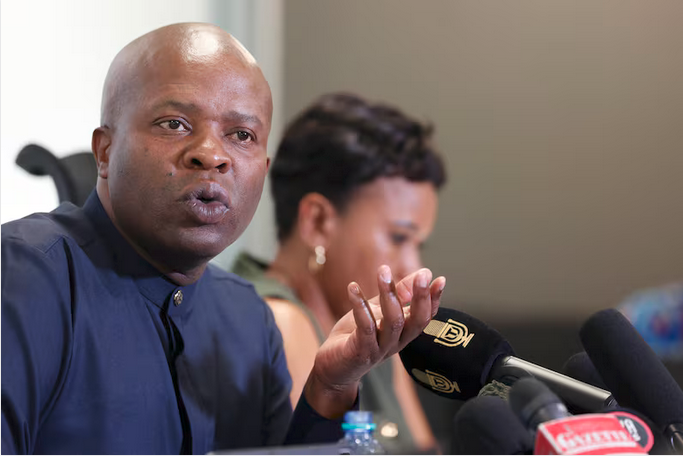
Gauteng finance and economic development MEC Lebogang Maile has emphasised the importance of coordinated planning between municipalities, provincial departments and schools when it comes to infrastructure development.
Speaking to Sowetan about recent concerns that some municipalities have been demanding that the Gauteng education department build roads so that a school can be constructed or occupied, Maile said this was a matter of planning, not policy.
“Roads and other infrastructure fall under different authorities. Municipal roads are the responsibility of municipalities; provincial roads fall under the province, and national roads under the national government,” he said. “What matters is proper planning and integration, so that schools are not built where there is no access or essential services.”
The Gauteng education department recently accused municipalities across the province of demanding favours, such as the construction of traffic lights and contributions to bulk infrastructure, in order to approve new schools.
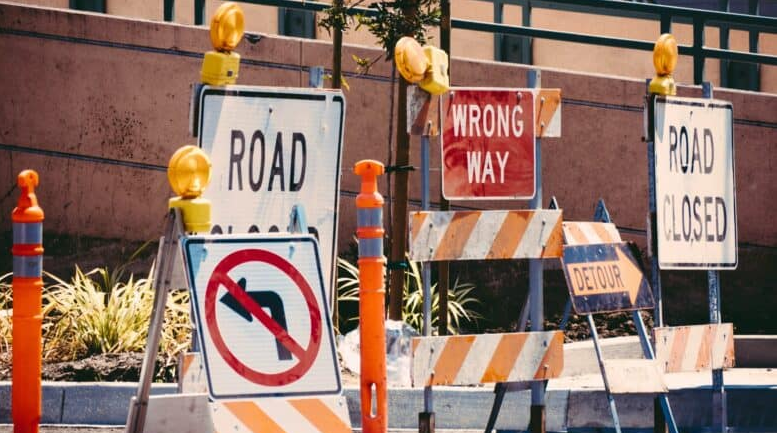
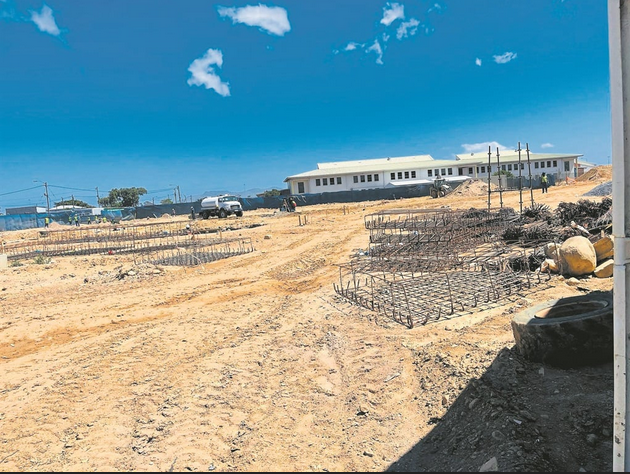
As a result, the department said 16 school projects have been delayed due to site approval issues raised by municipalities.
Gauteng education MEC Matome Chiloane said municipalities were one of the biggest problems when it comes to growing school capacity in the province, as they delay in approving plans and also make “ridiculous” demands in exchange for approving applications for schools.
Chiloane said plans to build more schools and upgrade existing ones were not moving forward, as municipalities want favours to approve applications for schools.
“In some schools that are completed and ready for occupation, the municipality said that for them to give us an occupancy certificate, we need to build a road.
“Our role is to build and sustain schools; we are not responsible for the road outside,” Chiloane said. “That is the responsibility of the municipality.”
Asked whether municipalities can make such demands, Maile said it depended on whose responsibility it was.
“The department of education doesn’t build roads,” he said. “If it’s a municipal road, it’s for the municipality to build.”
Regarding the continuing water challenges faced by Gauteng municipalities, Maile said there were structures in place to address the issue. He said premier Panyaza Lesufi had established an inter-ministerial committee which includes water and municipal officials.
“All municipalities face water challenges to some extent, but the important thing is that plans exist to manage these issues,” he added.
Maile also revealed that Gauteng’s three metros — Johannesburg, Ekurhuleni and Tshwane — were the main contributors to provincial revenue, while operating expenditure stood at R109.2bn, or 49.2% of the annual budget.
However, Johannesburg, Lesedi, Merafong City and Rand West City reported accumulated operating deficits during the period. An operating deficit occurs when a municipality’s day-to-day expenses exceed its day-to-day income over a financial period.
This means that the four municipalities spent more to keep services running than they collected from rates, service charges and other operating revenue.
Recent News
Here are recent news articles from the Building and Construction Industry.
Have you signed up for your free copy yet?
![[FILE] University of Cape Town](https://static.l2b.co.za/Images/Uploads/Photos//73a7e63a-b78e-431d-af5c-d9f1175b465b.png)