Kimberley residents demand answers over surprise school development
Advertising
16-01-2026
Read : 126 times
NovaNews
Source
The Northern Cape Department of Education has confirmed plans to build two new schools on a site near Mediclinic Gariep in Kimberley, but has failed to address critical questions about environmental authorisation, municipal approvals, and compliance with national school infrastructure standards.
The department’s brief response to detailed inquiries raised more questions than answers, confirming only that the site “has been earmarked for the construction of two new schools” and that land was purchased from Sol Plaatje Municipality.
Significantly, the department acknowledged that “all legislative processes and compliance matters are not yet concluded and therefore the construction cannot commence.”
However, the department confirmed that “preparatory work is currently in progress and therefore containers have already been placed on site”, raising questions about what constitutes “construction” and whether placing temporary classrooms on undeveloped land requires the same environmental and planning approvals as permanent structures.
Residents voice safety and infrastructure concerns
NoordkaapBulletin was alerted to the construction by a concerned resident, who said the site and temporary buildings for a primary and a secondary school were “urgently constructed in the veld because the primary school had to open on 14 January. We had no idea what was going on there on the site, until some contractors confirmed it was a primary school being erected.”
He raised concerns about the lack of running water, sewage infrastructure, the absence of a playground, grass and shade.
“Is the gravel road leading to the school an official road? Where do the learners reside? How are they being transported to school? Will there be any traffic and pedestrian safety measures? Does the school have a headteacher and a School Governing Body?
“These temporary classrooms are hot as hell in summer, and they have no air conditioning. Water in tanks seems to be the only source of water and it is unknown how sewage will be managed. To top it all, there is no shade in sight, let alone a playground with lawn. The construction came out of the blue and no neighbours or businesses were alerted. We as a concerned and affected community need answers to these questions.”
Environmental authorisation questions remain unanswered
The department did not respond to 14 detailed questions about the project’s compliance with national legislation.
No confirmation was provided on whether Environmental Authorisation under the National Environmental Management Act (Nema) has been obtained, despite this being a legal requirement before any construction begins. Violations can result in fines up to R10 million or imprisonment.
The site’s natural Kalahari savanna vegetation and camelthorn trees would typically require significant environmental assessment, including appointment of a registered Environmental Assessment Practitioner and a public participation process.
The department did not confirm whether building plans have been approved by Sol Plaatje Municipality or whether land use applications were submitted. Searches of Northern Cape Provincial Gazettes, Sol Plaatje Municipality notices, and Department of Education announcements for 2024-25 found no published notices regarding environmental authorisation, building approvals, land use applications, or public consultation processes.
Critical infrastructure gaps identified
Critical questions about bulk water and sewage infrastructure remained unanswered. The site allegedly currently lacks connection to municipal water and sewage systems, relying instead on water tanks. The National Minimum Norms and Standards for School Infrastructure mandate that schools must have sufficient water supply complying with the Water Services Act and proper sanitation facilities, with pit toilets and bucket latrines expressly prohibited.
The department did not address concerns about temporary classrooms lacking air conditioning or adequate shade in the extreme summer heat of the Northern Cape, despite national standards requiring appropriate temperature control measures.
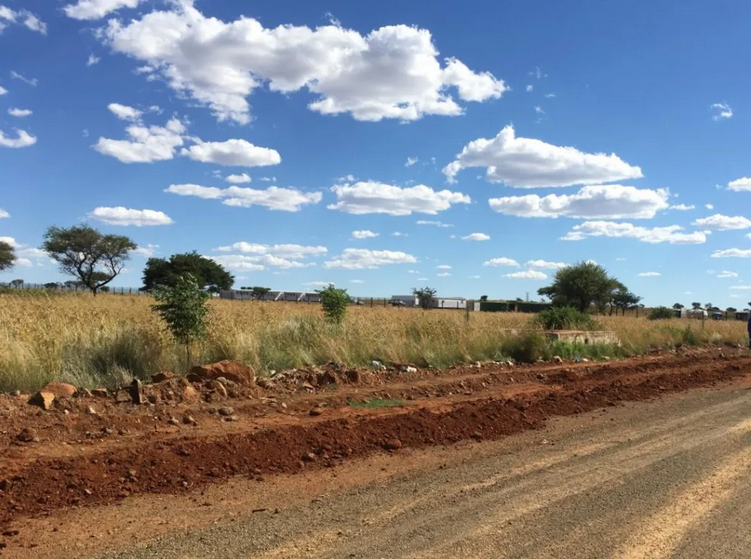
No information was provided about traffic impact assessments or road upgrades. The current access road, part of McDougall Street, appears to be gravel, raising questions about its adequacy for daily school traffic and pupil transport.
The department did not confirm whether ward committee meetings were held, whether the local community was consulted, or how the school’s catchment area was determined and justified through demographic studies. Questions about whether an interim School Governing Body has been appointed and how parents will participate in school governance were also not addressed.
Legal requirements and compliance standards
South Africa’s National Minimum Norms and Standards for School Infrastructure (2013) establish strict requirements for new school construction, including that schools must be located to ensure easy accessibility to roads, sewage lines, and basic services. Schools not meeting Basic Safety norms must be prioritised for immediate attention or face potential closure under Section 33 of the South African Schools Act.
The Spatial Planning and Land Use Management Act requires land use applications and compliance with municipal spatial development frameworks—processes that can take up to 12 months. Environmental legislation prohibits any building operations from beginning without proper Environmental Authorisation, with the EIA process typically taking six months to over a year.
Contradictions between policy and practice
The department’s statement that construction “cannot commence” until “all the paperwork is in order” contradicts the physical reality of containers already placed on site and what appears to be site preparation work underway. Activities that involved clearing natural vegetation or altering virgin soil have already taken place.
The department did not provide a timeline for when all approvals would be in place or when permanent school infrastructure meeting regulatory requirements would be completed, nor did it provide information about budget allocation or whether proper tender processes were followed for construction and infrastructure work.
Meanwhile, in a separate statement, the department declared readiness for the 2025 school academic year, which commenced on 14 January. The department reported welcoming back educators, learners and support staff, stating that “learning and teaching commenced on the first day of the school academic year.”
The department reported placing 30 818 learners, with only 188 unplaced in the John Toalo Gaetsewe District.
Recent News
Here are recent news articles from the Building and Construction Industry.
Have you signed up for your free copy yet?