Keeping road projects on track
Advertising
02-10-2026
Read : 6 times
The Content Engine
Source
South Africa has an estimated 750 000 km road network, making road construction and maintenance a major infrastructure undertaking.
However, a road project can be priced to make a margin and still lose it on site.
It happens when earthworks production falls below the estimate, trucks spend too long waiting, haul routes are poorly planned, plant is under-utilised, levels are wrong, or drainage and pavement activities are badly sequenced. Each decision can increase production costs, create rework, extend the programme and erode the margin built into the tender.
The risk does not stop at production. Changed ground conditions, weather disruptions and other site events can affect quantities, programme and construction methods. If these events are not properly assessed, recorded and managed against the contract, costs can remain with the contractor rather than being recovered through the appropriate commercial mechanism.
Kobus Brummer, Ambassador and Driving Force behind TjekaGO Knowledge Based Learning Programme for On-Site Leaders, says this is why road construction needs site managers who understand both the work being built and the controls that determine how it is delivered.
“Tjeka Training Matters addresses this through practical, work-connected training for road-construction professionals,” Brummer says. “TjekaGO allows site managers, foremen and supervisors to develop these capabilities while managing active projects. The Specialist Construction Programme for Roads and Earthworks covers the technical, operational, quality and contractual disciplines required on road projects.”
Small weak links, great consequences
Brummer notes that site managers carry responsibility for far more than supervising construction activities.
“Their decisions influence production, programme, quality, plant utilisation, resources, subcontractors, safety and contractual compliance. On a road project, these elements are tightly connected,” he says.
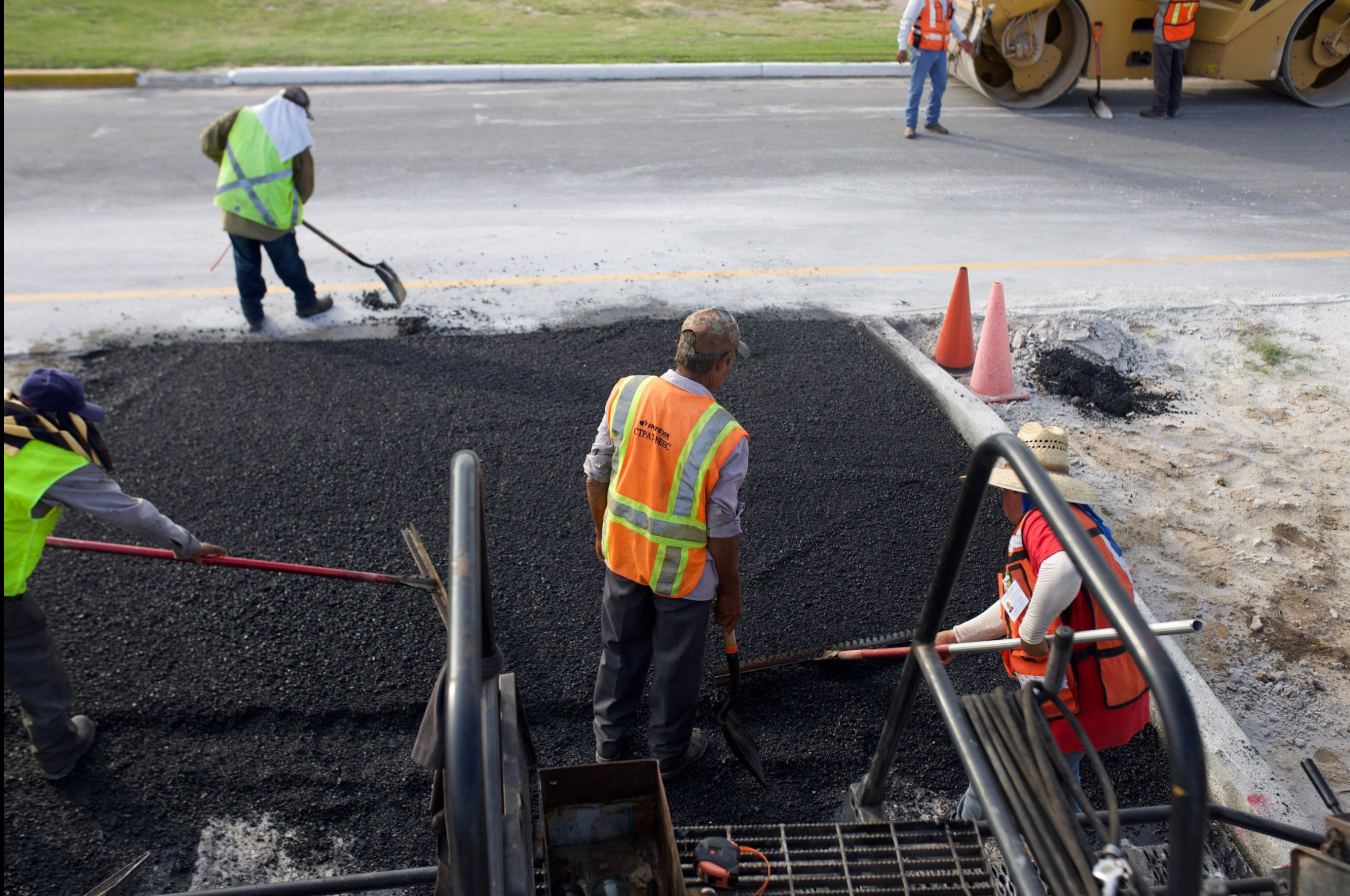
Road construction is a linear production process. Survey control establishes levels and alignment. Bulk earthworks create the formation, followed by drainage, subgrade preparation, compaction, pavement layers and surfacing. Each stage has to be ready for the next.
“A delay in earthworks can leave drainage crews waiting. Poor drainage sequencing can hold up pavement construction. Inadequate compaction can result in failed tests and rework. Poorly planned haul cycles can leave expensive plant standing idle,” Brummer says.
The consequences can extend beyond the construction site. A CSIR study using actual truck-tracking data from a Johannesburg–Port Elizabeth route found that, on a 50 km section reduced to one lane during road maintenance, a truck stopped 18 times and averaged only 20 km/h. The study calculated that the disruption could increase a 1 000 km journey by 27% under its stated assumptions.
While this study examined the effect on road users rather than construction productivity, it illustrates how relatively short sections of constrained road activity can have consequences beyond the immediate work area.
“The site manager therefore has to see the project as a connected operation, understanding how decisions in one area affect cost, programme and the work that follows,” Brummer emphasises.
Changing conditions add another layer of complexity. Unexpected ground conditions can alter excavation quantities and material requirements. Weather can disrupt earthworks and compaction. Road design changes can affect quantities and sequencing, while traffic accommodation can constrain working areas and construction methods.
“The site team must recognise these events, understand their implications and maintain the records needed to manage them under the contract,” Brummer says. “A site manager needs to understand not only what is happening physically on the project, but what those events mean commercially.”
The site doesn’t stop for training
The people responsible for managing road construction are often the people who cannot easily be taken away from the site.
Removing an experienced foreman, site agent or construction manager from an active road project for extended classroom-based training has an operational cost. Earthworks, drainage, pavement construction and traffic accommodation continue regardless.
TjekaGO addresses this constraint through remote, facilitator-supported learning, allowing construction professionals to develop their capability while remaining connected to active projects.
Brummer says, “This is particularly relevant to roads and earthworks, where the principles being learned can be applied directly to current responsibilities.”
Practical training for road construction
Tjeka’s Specialist Construction Programme for Roads and Earthworks follows the progression of a road project, from establishment through to handover.
It covers project inception, mobilisation, logistics, heavy-plant planning, drawing interpretation and survey control before moving through bulk excavation, subgrade preparation, stormwater drainage, culverts, erosion control and pavement construction.
The commercial disciplines are equally important. The programme covers tendering and cost estimation, contract administration, COLTO/COTO requirements and linear scheduling. COTO 2020 provides dedicated South African specifications covering areas including drainage, earthworks and pavement construction, geotechnical work and quality assurance.
Quality and governance are integrated into this technical progression, including compaction testing, site records, road handover, health and safety, traffic accommodation, environmental management and subcontractor and stakeholder coordination.
“The focus is on the practical disciplines required at each stage of road construction,” Brummer says.
Experience that covers the whole job
Many road-construction professionals progress into greater responsibility through practical experience. That experience remains essential, but it does not necessarily provide structured exposure to every discipline required on a modern road project.
“A technically strong professional may still need to strengthen capability in plant rate calculations, linear scheduling, contract administration, quality systems or project documentation. Tjeka’s approach is to connect these disciplines to the working environment rather than treating them as abstract theory,” Brummer says.
This is particularly relevant as South Africa manages a large and ageing road asset. The Department of Transport's 2024/25 planning document records that 80% of SANRAL's paved network is older than its original 20-year design life, increasing the risk of accelerated deterioration where preventative maintenance is inadequate.
For contractors working on new construction, rehabilitation and maintenance, that environment places a premium on disciplined site execution and control.
The measure is project control
Brummer says the effectiveness of site capability can be seen in the quality of day-to-day control.
“Are production rates being monitored? Are plant and haulage being coordinated? Is work being completed to specification? Are activities properly sequenced? Are quality records complete? Are site events being documented correctly?”
These are practical controls that determine how effectively a road project is delivered.
“Better road construction management starts with people who understand the construction process and can control it in practice,” he concludes.
For more information please contact:
David Poggiolini
Debbie Poggiolini
Recent News
Here are recent news articles from the Building and Construction Industry.
Have you signed up for your free copy yet?