Just 16% of public infrastructure tenders concluded in the past year
Advertising
22-09-2026
Read : 5 times
Moneyweb
Source
This is ‘paralysing the state’ and is ‘quite frankly beyond Public Works’ – Macpherson.
Only one in six public infrastructure tenders were concluded in the past 12 months, according to Infrastructure South Africa (ISA).
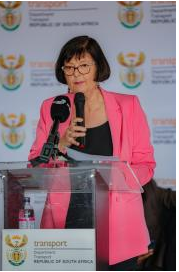
Minister of Public Works and Infrastructure Dean Macpherson cited the statistic in an address to an infrastructure delivery forum hosted by Cox Yeats Attorneys on Friday (18 September), stressing that “this is simply not good enough”.
Macpherson said the real bottleneck in infrastructure delivery was a severe shortage of projects that are bankable, technically prepared, legally implementable and properly structured.
Master Builders South Africa executive director Roy Mnisi highlighted several key challenges facing infrastructure delivery, including:
- Disruption of the construction sector by the construction mafia;
- Late payment of contractors, with subcontractors frequently only paid once main contractors have been paid;
- Corruption;
- Excessive red tape and compliance requirements; and
- A serious lack of capacity to implement infrastructure projects, especially mega-projects.
Macpherson said the reasons for only one in six public infrastructure tenders being concluded are multifaceted, but largely stem from internal issues within procuring departments and project sponsors, including state-owned enterprises.
He said some contracts were not in a suitable state to be considered for award because there was insufficient data to financially close them.
In other cases, projects were allowed to “collapse” by their sponsors and were therefore not finalised or adjudicated within a specific timeframe.
Macpherson said the reality is that there are some municipalities, for an example, that cannot get even the basics right when it came to infrastructure procurement, a problem evident in both metros and smaller municipalities.
“The real intervention that we should be considering is how do you either capacitate them to be able to put proper tender documents together – or do you externalise that to make sure that they can reach close?
“It is pretty systemic and it requires urgent intervention that is quite frankly beyond Public Works,” said Macpherson.
“But if we want to ramp up the delivery of infrastructure to be able to go from one in six to three in six [tenders], that would itself make a big difference.”
Fear of responsibility
Macpherson said a “Chinese wall” exists between procurement and execution, with supply chain management reluctant to take on any of the responsibility that comes with procurement.
He said this is bad for government and procurement, creating “the most unbelievable frustration” for accounting officers, executive authorities and deputy director-generals.
“It is an untenable situation that, if it is left to continue, will actually paralyse the state. It is paralysing the state.”
Macpherson said infrastructure and procurement has to be an ecosystem that talks to an intended goal and outcome.
“That is something that government and The Presidency needs to seriously consider because it’s not just in Public Works, it’s across the board.”
Saul Musker, director of strategy and delivery support in The Presidency, said government is generally not very good at building things, but is good at specifying outcomes, planning and determining what it wants.
“I think the best model we can employ in this environment allows the state to clearly specify outcomes and then place the responsibility on the private sector to meet or deliver those outcomes in whatever way it can,” said Musker.
Funding isn’t the problem
Macpherson pointed to progress made with government’s Strategic Integrated Project (SIP) portfolio and stresses that “South Africa does not have a capital problem”.
Private financial markets, institutional investors and development finance institutions have significant liquidity seeking stable, long-term returns, he said, adding that there is substantial potential to unlock.
Finance Minister Enoch Godongwana told the 2026 Master Builders South Africa Congress earlier this month that the challenge with infrastructure delivery is not a lack of funding, but government’s ability to consistently convert allocations into functioning infrastructure that people can depend on.
“This reality has direct implications for the construction sector,” said Godongwana.
“Infrastructure failures undermine economic growth, constrain job creation, and weaken growth prospects for local economies. They also limit the growth potential of the construction industry itself.”
No shortage of projects …
Macpherson said the SIP portfolio currently comprises 195 public- and private-sector-led projects with an estimated capital value of more than R1.67 trillion.
Looking at the expanded portfolio metrics, he said the government has 81 SIPs comprising 263 individual projects valued at R1.98 trillion.
“What matters now is ensuring that these projects are in fact implemented,” he said.
“Over the past 18 months, our delivery mechanisms have produced tangible and measurable progress across every stage of execution.”
Macpherson said 32 strategic projects valued at about R48 billion have reached full completion, while expanded tracking figures show 37 completed projects worth R69 billion.
He said 55 projects valued at more than R407 billion are currently under active construction, while updated tracking figures put the number of projects under active site execution at 82, with a combined value of R502.7 billion.
Macpherson said a further 29 projects valued at R115 billion, expanding up to 54 projects worth R206 billion, are moving through documentation, formal tendering and commercial close.
He added that ISA has processed more than 500 regulatory facilitation cases, successfully resolving about 87% of statutory blockages related to environmental permits, water-use licences and land-use approvals.
Recent News
Here are recent news articles from the Building and Construction Industry.
Have you signed up for your free copy yet?