Gauteng Department of Roads and Transport Launches Internal Road Construction Model on Road D781
Advertising
10-04-2026
Read : 4 times
Central News
Source
The Gauteng Department of Roads and Transport (GDRT) has taken a decisive step to build roads using its own internal teams and resources by launching a new construction model on Road D781 in the City of Ekurhuleni.
This pioneering project marks a major shift away from the traditional reliance on external contractors.
Instead, the department will use its own technical staff, plant and project management skills to deliver the work.
The Heidelberg Construction Office has been chosen to lead the project as a proof-of-concept that could later be rolled out across the entire province.
Internal Capacity at the Centre of New Approach
The decision follows the department’s first internal strategic engagement focused on strengthening its own delivery capability.
MEC for Roads and Transport Kedibone Diale-Tlabela explained that the move is designed to speed up service delivery, control costs better and improve quality and accountability.
By building the road internally, the department aims to reduce dependence on outside service providers.
External companies will only be brought in for highly specialised work that the internal team cannot handle. This approach is expected to give the department greater control over timelines, budgets and the standard of workmanship.
Road D781, which runs along the north-south corridor in Ekurhuleni, has been selected as the flagship project for this new model.
The road serves as an important link in the region, and its upgrade will benefit thousands of daily commuters and local businesses.
Heidelberg Construction Office to Take the Lead
The Heidelberg Construction Office already has a clear mandate for road construction, maintenance and fleet management.
It will now serve as the central unit driving this internal project.
The office brings together engineers, technicians and support staff with practical experience in building and maintaining provincial roads.
MEC Diale-Tlabela said the Heidelberg team will act as a testing ground for the new model. If successful, the approach can be expanded to other regional offices across Gauteng.
She described the project as “a bold departure from conventional delivery models” that will help build long-term institutional strength and skills inside the department.
Focus on Skills, Innovation and Partnerships
Beyond simply constructing the road, the project has been designed as a learning and innovation platform.
The department plans to work closely with universities and technical colleges for:
- Materials testing and quality control
- Skills transfer and technical training
- Work-integrated learning opportunities for students and young graduates
Smart technology and sustainable practices will also be incorporated where possible, ensuring the upgraded Road D781 meets modern standards for safety, efficiency and environmental care.
This collaboration is expected to create valuable training opportunities for young people while improving the department’s technical capabilities for future projects.
Why This Matters for Gauteng Residents
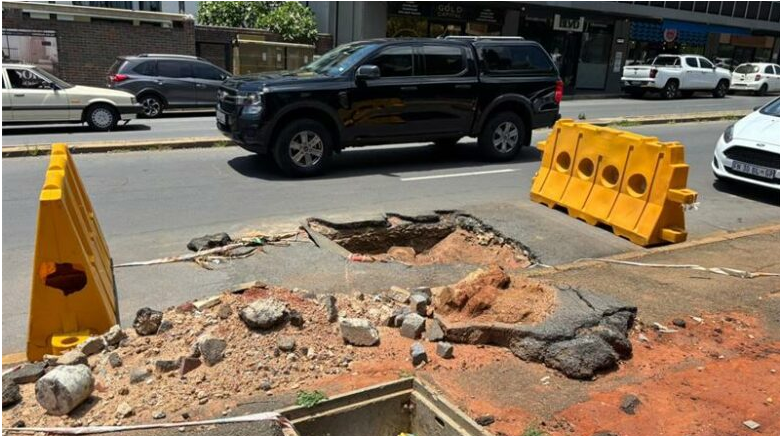
Gauteng has some of the busiest roads in the country, but many routes suffer from potholes, poor maintenance and long delays in repairs.
By developing its own internal construction capacity, the department hopes to respond faster to road problems and deliver better quality work at a lower overall cost.
For motorists and communities along Road D781 and other provincial routes, this could mean smoother, safer roads and fewer disruptions caused by lengthy tender processes.
It also signals a commitment to building a more self-reliant and efficient public service.
Strong Governance and Collaboration
During the strategic engagement, officials from the Roads Branch, Finance, Risk Management, Stakeholder Relations and Communications worked together to align on project goals, roles and compliance requirements.
This integrated planning is intended to ensure transparency and smooth execution from the start.
The department has emphasised that the project will follow strict governance processes while still moving with the urgency needed to improve infrastructure.
A New Era for Road Infrastructure Delivery
MEC Diale-Tlabela described the initiative as an investment in the department’s own people and systems.
She believes that by strengthening internal skills and capabilities, the GDRT can deliver better roads, faster, and with greater accountability.
“This internally led road construction project represents a bold departure from conventional delivery models,” she said. “It signals the beginning of a new era in infrastructure development for Gauteng.”
If the pilot on Road D781 proves successful, the model could be scaled up to tackle other priority roads across the province. This would represent a significant change in how Gauteng builds and maintains its road network.
For residents who rely on provincial roads every day, the launch of this internal construction model brings hope of improved service delivery and more responsive maintenance in the years ahead.
The coming months will show how effectively the Heidelberg Construction Office can turn this new approach into visible results on Road D781 and beyond.
Recent News
Here are recent news articles from the Building and Construction Industry.
Have you signed up for your free copy yet?