Finding South Africa’s grey women and then developing them
Advertising
12-08-2026
Read : 15 times
The Content Engine
Source
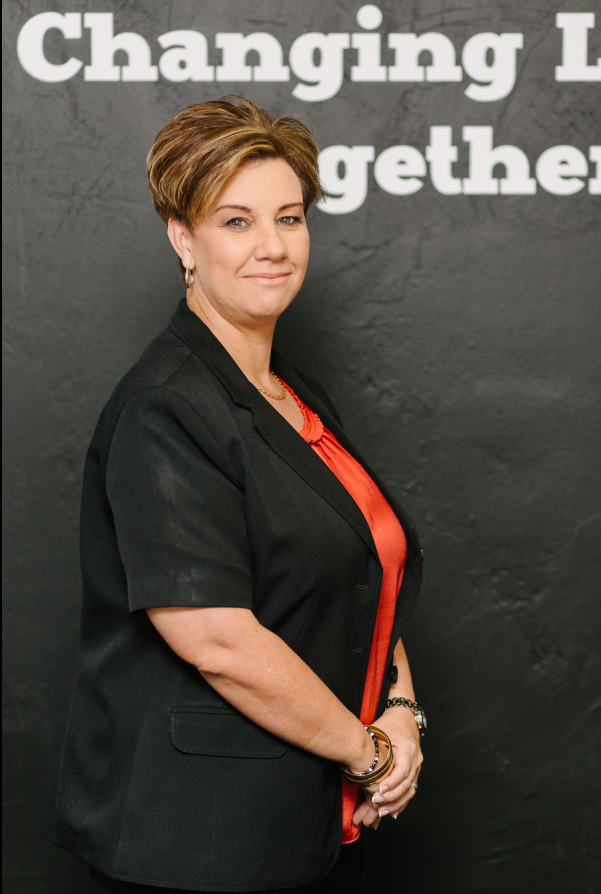
Some of the women who could shape South Africa’s future are not yet visible. They are quiet, hesitant and often overlooked because they have never been given the confidence, skills or opportunity to show what they can do. After 28 years at Triple E Training, Marinda Clack has seen what can happen when these women are given the opportunity to develop. For her, helping women who have been overlooked find their voice, build their confidence and recognise their own potential are at the heart of empowerment.
Clack has encountered women who have spent years relying on others to read documents, explain payslips or handle financial transactions, while managing households, raising children and dealing with the demands of everyday life.
“Their capabilities can be far greater than they believe,” she says. “I continue to see how developing literacy and numeracy skills can begin to change. As women become more comfortable with reading, writing and numbers, they often become more confident, more independent and more willing to participate.”
Clack refers to some of these women as the “grey” women. They are present in families, workplaces and communities, but their potential remains largely unseen.
“Are we missing a future leader?” she asks. “Maybe that grey woman is the next Thuli Madonsela. However, we will never know if we do not get that person there.”
South Africa has seen the contribution women can make when given the opportunity to lead, from Madonsela in public life to business leaders such as Wendy Luhabe and Phuthi Mahanyele. Clack’s concern is for the women who have not yet had that opportunity.
“You can, I know you can”
Clack’s own career began with someone else recognising her potential before she recognised it herself.
Growing up as a white South African before 1994, she had little exposure to the realities faced by people who had been denied access to quality education. Adult literacy was outside her experience and certainly not something she imagined pursuing as a career.
“I did not know there were people who could not read and write,” she says. “Like so many other South African families, we were not exposed to that other part of life.”
Her introduction to the industry came through the Clack family. She met Lance Clack, son of the late Joe Clack, founder of Triple E Training, and through him was introduced to the family business. Joe eventually encouraged her to join the company.
Clack was hesitant because she had little confidence in her own ability and was unsure whether she could make a success of the opportunity.
Joe was convinced otherwise.
“You can,” he told her. “I know you can.”
Joe remained an important influence during her early years at Triple E Training. He believed strongly in developing people and, as Clack recalls, “saw potential in everyone” and “opportunity for development in everyone”. She describes him as an old-school HR manager in the best sense. “He was someone who cared about his employees, understood their circumstances and made time for them,” says Clack.
Joe died in 2022, but his approach continues to influence Triple E Training and Clack’s own understanding of her role.
Women have also been part of the story behind Triple E Training from the beginning. The company’s name came from Joe’s wife and Lance’s mother, Nellie Clack: Educate, Enrich and Empower.
Those three words remain central to the company’s approach to developing people. “Education provides knowledge and skills; enrichment broadens a person’s understanding and possibilities; and empowerment comes when people can use what they have learnt to make decisions and take greater control of their lives,” she explains.
Giving women greater control
One woman remains particularly vivid in Clack’s memory. She was so unsure of herself that she questioned whether she should be participating in the workplace literacy programme at all.
“She really believed that she was not allowed to do this, or that she should not do it,” Clack recalls. “I had to work hard to persuade her to continue.”
She has seen similar changes in other women as they develop literacy and numeracy skills. They become more willing to ask questions, participate in discussions and make decisions for themselves.
One woman demonstrated just how significant this can be. Her husband controlled the household finances and would come home with ATM slips that he knew she could not read. Once she had developed her literacy and numeracy skills, she could understand the slips and see what was happening to the family’s money.
“I never thought ABET would do this,” says Clack. “It gave her more control over the family finances.”
For Clack, this is why the term “basic skills” can be misleading. Reading a document, understanding a payslip or working out a financial transaction can determine how much control a person has over her own life.
The implications extend beyond the household. During a community project in Ikageng outside Potchefstroom, one young woman told Clack she intended to start her own beauty business.
“That is all that matters,” Clack says. “Anybody can have it if you want it. Although the business was still an aspiration, what mattered was that the woman could see it as a possibility.”
Clack believes the same applies to leadership. The most confident person in the room is easy to notice, but the woman who has an idea but lacks the confidence to voice it is not.
She encourages young women to speak up, even when they are uncertain.
“If you are not going to speak up, I will walk over you,” she says. “Your voice does matter.”
For Clack, this is not about always having the right answer. Women need to be able to ask questions, offer ideas and have difficult conversations without being afraid of looking foolish.
Not a basic issue
Clack is particularly concerned about the relationship between education, independence and women’s vulnerability. Gender-based violence can be physical or emotional, while financial dependence can make it harder for women to leave abusive situations or make decisions for themselves.
“Education does not solve these problems on its own,” she says. “However, literacy, numeracy and financial understanding give women greater ability to understand their circumstances and make choices.”
That is why Clack believes companies also need to be honest about foundational skills in the workplace. Adult literacy and numeracy may not be fashionable subjects but pretending that gaps do not exist does nothing to address them.
She found her way
Her own experience at Triple E is part of that story. The company gave her space to develop abilities she did not initially know she possessed. At one point, she realised she had brought in a million-rand business – something she had once doubted she could achieve.
“I had to find my own way of doing things,” she assets, noting that the “grey” women also have an opportunity to discover that they can do more than they thought possible.
Her understanding of resilience was also shaped at home. Her mother, Nancy Meyer, died in 2022, but left her with a phrase that remains part of her thinking: skouer aan die wiel sit – shoulder to the wheel.
It was how Nancy ended conversations, a reminder to keep going and keep things moving.
Clack sees that quality in many women. They solve problems, keep households functioning, raise children and carry responsibilities that are often taken for granted. She believes that same determination should also be directed towards their own development and independence.
“The future leaders are already here. They are contributing to their families, workplaces and communities. What is missing is often the opportunity to see what else they can do,” she says.
Her advice to the “grey” women this women’s month is “You can,” “I know you can.”
For more information please contact:
David Poggiolini
Debbie Poggiolini
Recent News
Here are recent news articles from the Building and Construction Industry.
Have you signed up for your free copy yet?