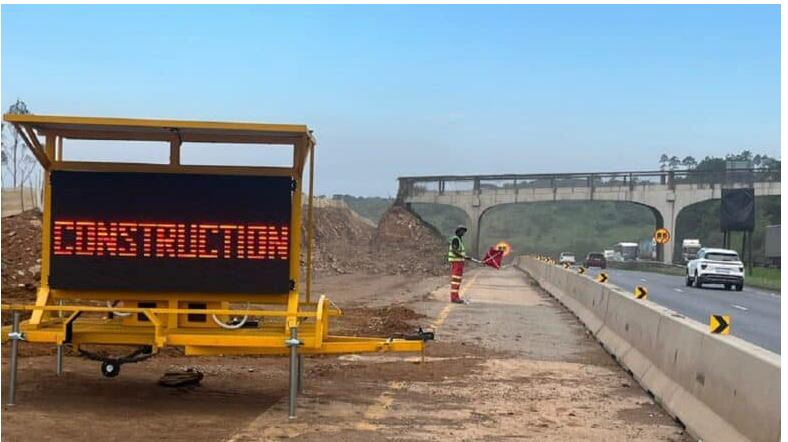
Construction activity in Q1 shows first sustained recovery since 2020
Advertising
25-06-2026
Read : 9 times
Property Wheel
Source
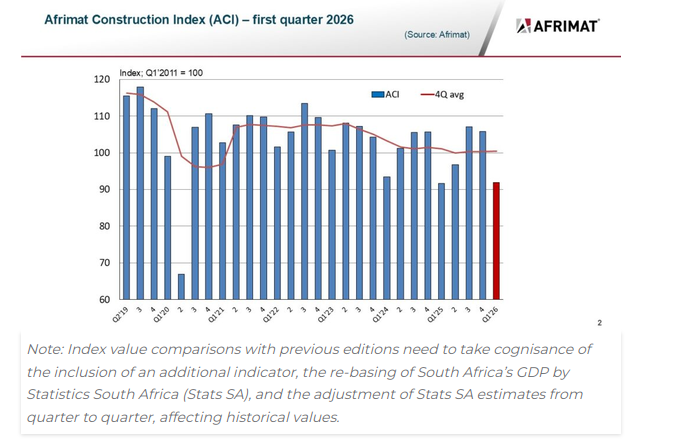
While activity levels in SA’s construction sector remain subdued, the Q1 2026 Afrimat Construction Index’s (ACI) seasonally adjusted reading increased for the third consecutive quarter – the first time since 2020’s brief recession.
Compiled by economist Dr Roelof Botha, the index shows a marginal year-on-year increase of 0.3%, boosted by year-on-year increases of more than 5% in the value of both construction works and buildings completed while employment and sales of building materials also improved.
“The most impressive aspect of the latest ACI reading is the stability that has crept in for two key indicators – the value of commercial buildings completed, and the value of construction works,” says Dr Botha.
He adds that employment levels in the construction sector are also encouraging, having managed to outperform job creation in most other sectors with 74 000 more jobs in the Q1 2026 than a year ago.
“Despite the combined value of construction works and buildings only accounting for 5.5% of total value added in the economy, the construction sector was responsible for 11% of the new jobs created in the first quarter of 2026 year-on-year.”
Note: Index value comparisons with previous editions need to take cognisance of the inclusion of an additional indicator, the re-basing of South Africa’s GDP by Statistics South Africa (Stats SA), and the adjustment of Stats SA estimates from quarter to quarter, affecting historical values.
As was the case in Q4 2025, five of the 10 indicators reported positive year-on-year growth rates while one remained unchanged and three of the other four recorded declines of less than 2% year-on-year.
“Lower interest rates have played an important role in lowering the cost of capital formation, and the peace accord between the US and Iran may lead to a resumption of the rate-cutting cycle during the second half of the year,” says Dr Botha.
He says that it is encouraging that total construction tender activity during February and March experienced two consecutive months of double-digit increases.
According to a report published by Industry Insights, overall construction tender activity in SA increased by 11.4% year-on-year in the first four months of 2026. KwaZulu-Natal, the Eastern Cape, and the North-West have shown notable increases thus far in 2026.
During Q1 2026, the macroeconomy also received a welcome boost in the form of a 1.4% year-on-year increase in gross domestic product (GDP) with investor sentiment improving due to a strong currency and upgrades by international ratings agencies for the outlook of SA’s sovereign debt.
Looking ahead, Botha is hopeful that the reopening of the Strait of Hormuz in the Middle East will lead to lower inflation and a resumption of the Reserve Bank’s rate-cutting cycle.
“A lowering of the prime rate will go a long way to restoring profitability in the construction sector, which is sensitive to the cost of capital – especially in residential construction.”
Recent News
Here are recent news articles from the Building and Construction Industry.
Have you signed up for your free copy yet?