Chinese technology and speed reshaping one of SA’s busiest freeway intersections
Advertising
23-02-2026
Read : 24 times
Sunday World
Source
At the crossroads of South Africa’s busiest freight corridor, where thousands of vehicles pass each hour on their way to and from Durban, a high-stakes engineering project is reshaping the future of logistics in KwaZulu-Natal.
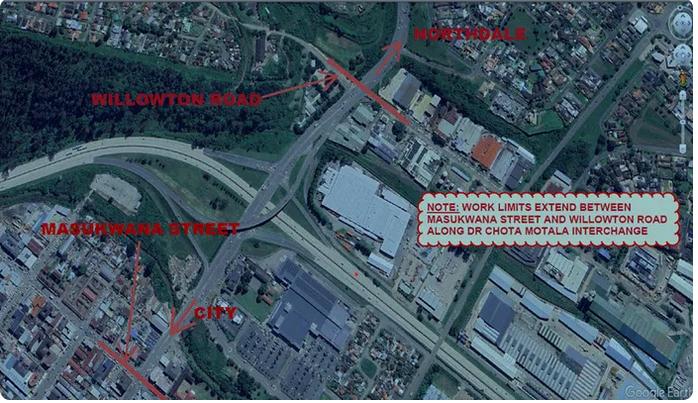
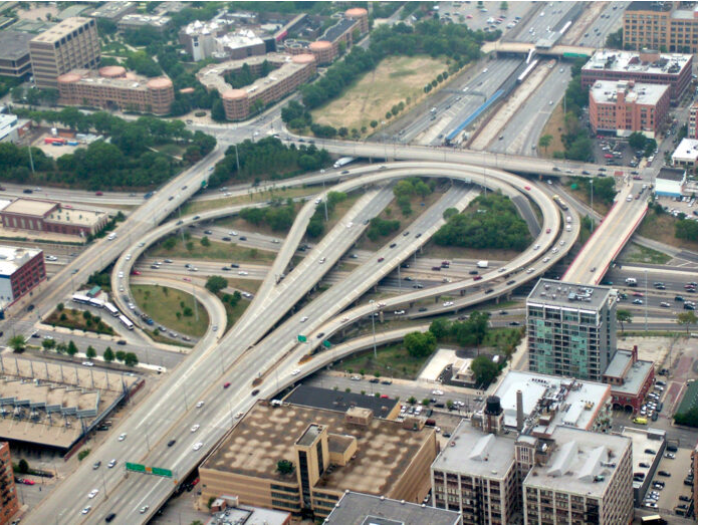
The R4.3-billion upgrade of the EB Cloete Interchange, the busy junction linking the N2 and N3 highways, is reshaping what has long been known as Spaghetti Junction into a modern transport gateway.
The construction is led by China State Construction South Africa, a division of the biggest construction company in the world, China State Construction Engineering Corporation (CSCEC).
It is considered one of the largest current road infrastructure investments in KwaZulu-Natal.
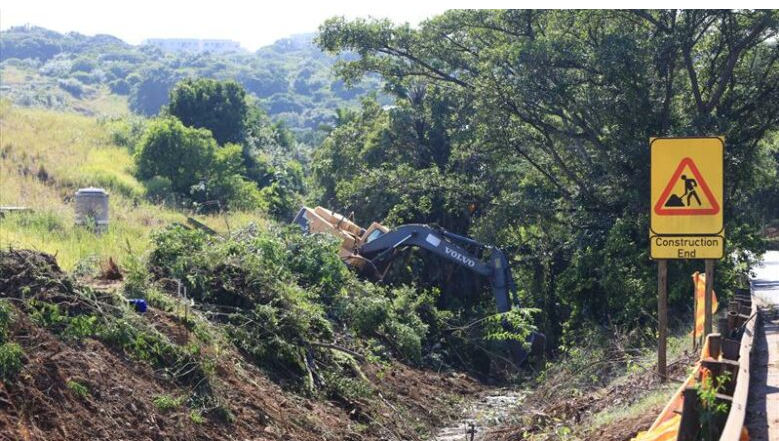
The company has constructed emergency repairs on the 60-year-old Mbokodweni Bridge on the N2 following its collapse, this work was completed in seven days instead of two months.
The EB Cloete interchange features multiple, intertwined flyover directional ramps and a large steel arch. It is vital for connecting cars moving between Johannesburg, the Durban Port and King Shaka Airport.
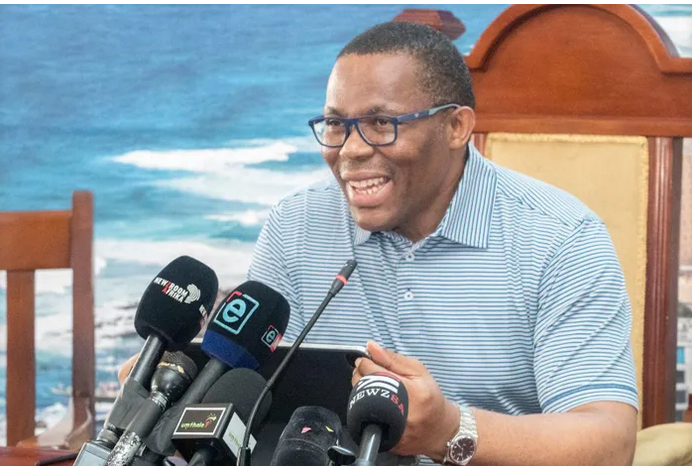
Chris Wang, contracts manager at CSCEC, the main project managers hired by the South African National Roads Agency (Sanral) to upgrade the interchange, said the originally built structure was never designed to handle today’s freight volumes or traffic demand.
The project was awarded in 2022, and construction commenced in January 2023. It is set for completion in 2028.
Wang said the need for the upgrade to the interchange was clear when considering the growth of logistics activity linked to the port. He explained that the redesigned interchange will ultimately feature 32 lanes, seven new overpasses and a cable-suspended iconic arch.
The entire structure is being widened, with additional lanes added on both the inside and outside approaches to ease congestion and remove long-standing bottlenecks. Instead of the usual four lanes, it will be widened to six lanes.
“With us widening the entire interchange and the run to the interchange by one new lane on the inside and one new lane on the outside, we are freeing up that traffic jam,” said Wang.
What makes the project particularly complex is that construction is taking place while traffic continues to move through the interchange. Bridge decks are being widened and lifted without shutting down the flow of vehicles.
“So, we have to do the widening of the decks while letting traffic flow. That’s why I say it’s like doing surgery on a heart while it is still pumping.”
A major component of the engineering work involves bridge jacking, which is lifting existing decks to create greater clearance between overlapping bridges. This requires extreme precision and advanced monitoring systems.
“In the last six months, we have successfully lifted three key bridges. To put that in perspective, we used PLC-based synchronous control systems with a dual-control mechanism combining elevation and hydraulic pressure. This advanced technology ensured that the lifting accuracy was maintained within [approximately] 0.5mm,” said Wang.
The highest jacking goes up to 800 millimetres. To minimise traffic disruptions, many of these operations are carried out at night or during carefully planned weekend windows.
He explained that it was understood from the beginning of the project that closing the bridge would “paralyse freight movement and cause chaos for commuters”, considering that over 261 000 vehicles drive through the intersection.
Beyond the physical transformation of the interchange, the project has been structured to deliver economic and social benefits to surrounding communities.
Wang said Sanral has tied the contractor to increase spending on the local communities and economy. At least 30% of the project value is allocated to contract participation goals, equating to R1.3-billion, opening opportunities for contractors graded CIDB 1 to CIDB 8.
The work is divided into about 200 tenders over five years, giving local and emerging businesses direct access to major infrastructure spending. Youth, women, military veterans and people living with disabilities are prioritised.
He said 8% of the contract, to the value of R330-million, is reserved for labour drawn from the seven wards along the route in support of local communities.
“It’s equating to 2 700 new jobs that have been created through the contract,” said Wang. R70-million is being invested in a Contractor Skills Development Goal programme aimed at building long-term capacity and ensuring skills transfer; this is divided into four
categories.
Training includes opportunities for unskilled local residents with limited formal education, practical workplace exposure for TVET college students, and practical training for university of technology students.
“Our work on the emergency bridge repair and the EB Cloete Interchange demonstrates that we bring world-class technology and ‘China Speed’ to solve South Africa’s infrastructural challenges,” said Wang.
Recent News
Here are recent news articles from the Building and Construction Industry.
Have you signed up for your free copy yet?