439 roads damaged, R5.7bn needed: Limpopo premier warns rebuilding will be difficult

Advertising
19-01-2026
Read : 117 times
Sowetan
Source
Residents and commuters have expressed frustration over the prolonged delays and safety concerns surrounding the Jan van Riebeeck Road rehabilitation project in Cape Town. They are demanding immediate action from the City and its contractor, citing the impact of public safety and traffic congestion.
In their list of grievances, Imraahn Mukaddam, Chief Executive Officer of Inspire Network NPO, who spoke on behalf of residents, said the reconstruction of Jan van Riebeeck Road is a crucial transport corridor linking traffic from Stellenbosch and the Cape Town International Airport to Goodwood and the N1.
The City said while it acknowledged the inconvenience, it states this thorough approach is essential for a durable, 20-year solution.
In December, the Cape Argus reported that according to the most recent INRIX Global Traffic Scorecard, Cape Town is now ranked as the sixth most congested city globally.
Drivers in Cape Town lose an average of 96 hours annually due to traffic gridlock.
Mukaddam said the contractor assigned by the City has taken over three months to work on less than half of a 500-metre stretch of road, which impacted traffic congestion and safety concerns.
“Disruptive work scheduling: At approximately 90% completion, all work was suspended for a four-week break over the Christmas holidays,” he added.
“This decision, while perhaps accommodating to the contractor, demonstrates a blatant disregard for the prolonged inconvenience caused to thousands of commuters and residents.”
Mukaddam said the decision to close Riley Road, a key access route to the very busy Beaconvale Industrial Area, has compounded traffic chaos.
“The resulting congestion has caused incalculable inconvenience to motorists and local businesses,” he explained.
Mukaddam, who is also a crime fighter, said the stretch of road is notoriously known for smash-and-grab incidents.
“The protracted delays and resulting traffic bottlenecks have created ideal conditions for such criminal activity, thereby putting the lives and property of motorists at direct and unnecessary risk,” he expressed.
“The combination of these factors points to a catastrophic failure in project planning, oversight, and contractor management. What should have been a minor, efficiently managed infrastructure upgrade has instead become a source of daily frustration and a genuine safety hazard.”
Residents said they are demanding immediate action on completion of the project, an explanation for the grossly inefficient project management to date, and a review of the contractor's performance and measures to mitigate the safety risks for motorists stranded in congestion.
In response to the grievances, Councillor Rob Quintas, the City’s Mayco Member for Urban Mobility, added that the construction period for this project was planned and approved to run from November 10, 2025 to May 2026.
“The works are being implemented in defined phases, with one traffic lane rehabilitated at a time per phase. Jan van Riebeeck Road is a dual carriageway with two lanes in each direction, and this phased approach was deliberately selected to maintain traffic flow in all directions for the duration of construction," he said.
He cited that due to the age of infrastructure, it also impacted the process.
“This project constitutes a major structural road rehabilitation, not a short-duration resurfacing or “quick in-and-out” operation.
“While both resurfacing and rehabilitation are used to maintain the road network, the appropriate intervention is determined by pavement conditions.
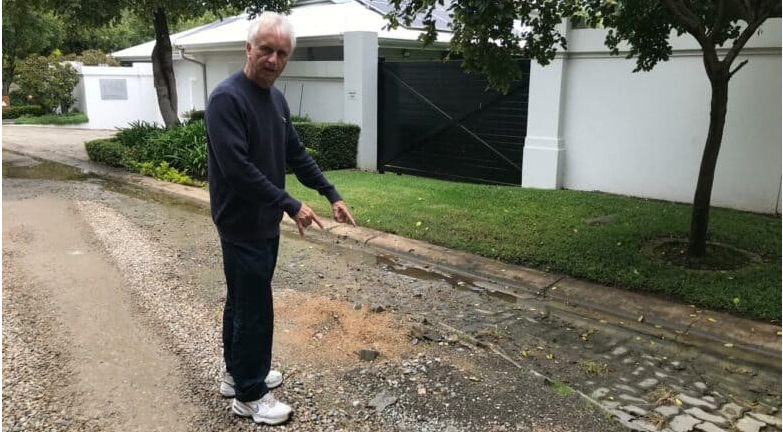
"Due to the age of the existing pavement structure and the exceptionally high traffic volumes (particularly heavy vehicle traffic), the road has suffered deep-seated structural deterioration.
"A surface-only treatment would not address these failures and would result in premature deterioration and repeat disruptions.
“The rehabilitation process, therefore, requires the removal of failed lower pavement layers and their replacement with stiffer cement-stabilised layers to form a durable structural foundation, followed by upper bitumen stabilised layers and a final asphalt surfacing.
"Cement-treated layers require a minimum curing period of seven days to achieve sufficient strength to safely carry construction traffic.”
Quintas added that during this curing period, the affected lane must remain closed.
He said extended working hours or night shifts would not reduce this curing period, as the lane must remain closed for the full duration irrespective of working times.
"During this time, the contractor is also restricted from moving onto adjacent lanes and proceeds only with ancillary works where permissible," he explained.
In keeping with the traffic management plan, he said it was specifically designed to minimise disruption by allowing traffic to continue flowing in all directions throughout construction.
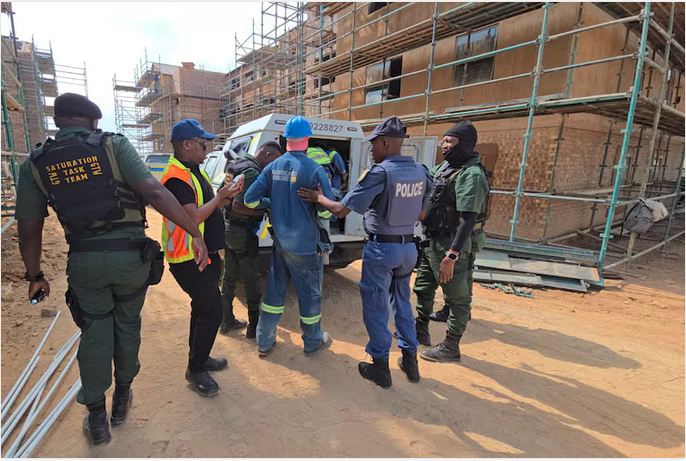
On the issue of public safety and smash-and-grabs, he added that law enforcement were deployed.
“The City also conducts regular performance management meetings with the contractor, during which construction progress, traffic accommodation, safety measures, and public impact are reviewed," he added.
Recent News
Here are recent news articles from the Building and Construction Industry.
Have you signed up for your free copy yet?