Special Report Podcast: Willie Meyburgh - CEO, Stefanutti Stocks

Advertising
16-05-2012
Read : 113 times
Moneyweb
Source
"The beauty of our company is that we are so diversified"
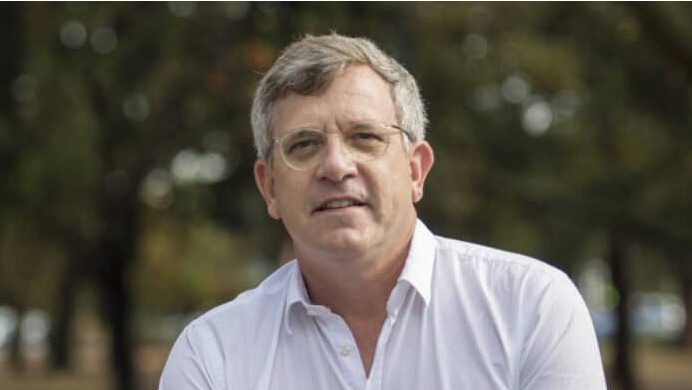
ALEC HOGG: It’s Tuesday May 15 2012 and in this Boardroom Talk special podcast, Willie Meyburgh, the chief executive of Stefanutti Stocks, is with us in studio. Well, it’s interesting to read the commentary to your results, the market seems to be in a tough place in construction, yet you grew your revenues, you managed to increase your revenues by 16%. Now I think many retailers would be delighted if things were going so tough that they could get higher sales. Where does this come from?
WILLIE MEYBURGH: I think, Alec, the first thing is the fact that we managed to grow the revenue that’s the nice thing and we’ve got an order book that’s gradually growing over the last number of years.
ALEC HOGG: Where does that…you talk about order book, what’s that? Contracts that you’re winning?
WILLIE MEYBURGH: Contracts that we have been awarded, that are secured, that have been put to book and that we now need to execute. Since February we’ve been awarded…our order book was at 8.6, it’s now as we stand now at 9.3 and the latter part of the order book is all quality order book. When I say quality order book, when you look at a large portion of our turnover and order book sits with our building company at low margins, whereas the recent awards were mainly with the business units that operate at higher margins, higher than our average of the group…
ALEC HOGG: Just give us an example of some of the contracts that you’ve been awarded in this period.
WILLIE MEYBURGH: Some of the contracts…in actual fact the day before yesterday we’ve been awarded not a big contract, a R108m Sanral project, at a reasonable price. We also have been awarded a project for ZTE, the company that’s doing the cellphone expansion on optic fibre for Cell C. We were awarded a project in Lesotho at the diamond mine there and they all add up in a non-building business. Although building forms an important part of our business we actually like to grow the order book within the other business units where, as I said before, we’d like to increase our average operating profit by growing that part of the business.
ALEC HOGG: That’s interesting the point you made and you give us those three examples, one is in the roads, one is in the technology area or telecoms area, the other one in mining. Are you seeing that there are sweet spots in the continent because you are operating in the continent and other areas that are completely dead or is it a nice steady flow?
WILLIE MEYBURGH: I think the beauty of our company is that we are so diversified and we’ve got a nice geographical footprint, especially in Southern Africa. On the building side, although we’re growing the order book, it is really at very tight margins but where we’re growing the order book currently are on projects outside South Africa in the SADC region. We are focusing especially in Namibia, Zambia, Botswana and also in Mozambique, where we’re very strong.
ALEC HOGG: Is it because those countries are on the march and South Africa maybe not so?
WILLIE MEYBURGH: Well, they offer better opportunities for us. If one looks at our group’s turnover, 25% of our turnover comes from outside the country, 33% of our operating profit comes from outside the country, so by implication it works for us to work outside the country, it’s profitable for us. It’s not only a once-off situation, we’ve been doing that for the last four years and as part of our plan and we’re trying to do it over the last number of years is to expand our business into the rest of Africa and I think we’re doing quite well.
ALEC HOGG: It is different though from the early days, if you go back five or more, South African construction companies took a hiding whenever they went out of South Africa. So what have you learnt?
WILLIE MEYBURGH: Well, I think the big difference between us and the other companies at the time we were much smaller, we have now grown to a reasonable size. When they moved back to South Africa, when there were difficult times, we stayed in those countries and in actual fact like in Mozambique we’re now seen as a local company, likewise in Swaziland and Botswana and countries like that, so with the result that we are in a better position to take advantage of work that’s coming out to the marketplace there. We’ve stayed there, we’ve formed alliances with local companies, we’ve formed alliances with the local people and I think we’re doing well. Building from that we’ve got a strong base to go into the rest of Sub-Sahara Africa.
ALEC HOGG: That’s interesting because that does seem to be the secret of doing business on this continent is get local partners.
WILLIE MEYBURGH: I think that is definitely the secret and that’s been our success. We’re not shy to share with other companies in the areas, we form alliances, we benefit, they benefit. We don’t just come back on a raid basis, once we operate there and come back to SA and then we look for bigger opportunities, however when we do follow our clients, specifically on large projects, especially mineral projects and we also get a benefit from that. We are not necessarily based in those areas but we form alliances with local companies, do the work and then when opportunities arise we then go back there again.
ALEC HOGG: Willie, how do you find the right partners in, say, Mozambique, use that as an example?
WILLIE MEYBURGH: Well, Mozambique we’re quite fortunate, we are a local, so we don’t need a partner there but yes, because we invest a lot of time and energy in how we want to operate into the rest of Africa that we select our partners very carefully.
ALEC HOGG: But how do you select them? Where do you find them? What’s the process?
WILLIE MEYBURGH: Well, I don’t think there’s a specific process, our ears are just on the ground, we’ve got close contacts with the local people and I think so far we’ve been very successful in picking the correct partners. Likewise they’ve got a good partner in the Middle East in Al Tayer, it’s a big family there that’s very influential. Also with the Zener company and now with the Rabban Group in Qatar. So we investigate it, we look at it carefully and then we pick the partners and it’s worked for us.
ALEC HOGG: I think a lot of people know that construction is important for jobs in South Africa, the government’s put a lot of effort into trying to get the construction story going but are you in a position where you are employing more people, are able to?
WILLIE MEYBURGH: As a result of our order book growing from, what I mentioned earlier, from February 2011 of 6.2 to where it is now at 9.3, we’re actually growing the business. We’re still a net employer of people and I think the fortunate thing we’re also spending money on capex to grow the business and with that comes a pressure on working capital but yes, to answer your question on labour, yes, we are still employing people, we’re growing the business…
ALEC HOGG: How many people do you employ?
WILLIE MEYBURGH: In total we’ve got just over 12 000 people in the group now.
ALEC HOGG: And in the last year, how many did you add to that?
WILLIE MEYBURGH: Probably about 10%
ALEC HOGG: So about 1200 jobs?
WILLIE MEYBURGH: Throughout the business, yes.
ALEC HOGG: And as far as the government is concerned, we’ve had the government telling us that there is now a high level committee with Jacob Zuma and members of his Cabinet, Premiers, who are trying to get construction going, they’re trying to get the infrastructure projects happening. Are you seeing any positive consequences?
WILLIE MEYBURGH: So far we haven’t seen anything like that but we certainly believe that once they put this committee or structure in place that we will see some deal flow…
ALEC HOGG: But it is in place.
WILLIE MEYBURGH: Well, it’s not….
ALEC HOGG: It’s in place but it’s not working, is that what you’re saying?
WILLIE MEYBURGH: Well, I think they’re going through a process, that’s what we certainly believe, to identify the high priority projects and we certainly feel by this time next year they hopefully will put projects to the market for us…
ALEC HOGG: So you’re not seeing it yet?
WILLIE MEYBURGH: We haven’t seen any of that yet, specifically on the projects that were announced through the budget period.
ALEC HOGG: If one looks at opportunities in Africa and I’m sure you’re aware of the Inga Falls project in DRC for instance, which if it were to come about, a hydro project, it could light up the whole of the continent. It’s often spoken about but again, not delivering, what do you think is behind that? Why is it that we have all this potential, we can get excited about things but it seems to be very hard to get over the line?
WILLIE MEYBURGH: Ja, I think a lot of these projects are driven by what’s happening in the world economy and also what’s happening with the demand on minerals. For example, we’re busy pricing at the moment some work in Liberia for Rio Tinto, then the latest information we got from newspapers in Australia is that they’re going to invest more in Australia than what they’re going to invest in Africa now. So that puts a bit of a damper on the whole issue. Then again we’re pricing some work for ArcelorMittal in… that was in [2:58 UNCLEAR] the other one was [UNCLEAR]. But it all depends I think on the world economy and demand for minerals because Africa is, I think, mineral driven. If you look at the infrastructure projects, we don’t really follow the infrastructure projects in Africa because to compete against the Chinese is quite difficult. That’s why we follow mainly our clients and the mineral projects but what we are quite excited about is the discovery of gas in northern Mozambique and the [UNCLEAR 3:27] in any companies which will develop those LNG plants over the next two, three years or maybe a bit longer. We certainly see fantastic opportunity and that will be probably real, that’s not going to be a promise.
ALEC HOGG: How big are those gas finds?
WILLIE MEYBURGH: From what we understand it’s enormous, we understand it’s probably within the third largest deposits in the world. So yes, when it happens I think the whole of Mozambique and Southern Africa will benefit from that.
ALEC HOGG: And you’ve positioned Stefanutti Stocks to participate?
WILLIE MEYBURGH: Well, we are talking to a number of the EPC contractors to position ourselves to when it happens that we will be in place to do that type of work. Then also, for instance, look in South Africa in terms of the renewables, the first round of the financial close [? 4:16] now needs to be finalised in June/July, hopefully a fair amount of work will come to the industry, not necessarily to us. We price some of the work as a sub-contractor, the second round we priced as an EPC contractor. So I think that type of work will bring a fair amount of work to the country, which will stimulate the industry.
ALEC HOGG: Sounds very exciting, why is it then that shareholders are not as enthused, do you think they’re not seeing the long-term prospects?
WILLIE MEYBURGH: I think they see the long-term prospects like us but they also like to see it like you mentioned earlier when does the tyre hits the tar, when does it happen and they don’t see it happening. I think as soon as these things are starting to happen, they probably have a lot more confidence in the construction industry.
ALEC HOGG: So the kind of shareholder who will benefit or the person you’d be advising to buy into your company?
WILLIE MEYBURGH: Well, we’ve got large institutions that have made commitment to buy into our company and they believe in our company and I would think that they advise their smaller share [UNCLEAR 5:12] where to advise. But I think looking at our company, at the PE we’re currently trading, it must be a good buy.
ALEC HOGG: Willie Meyburgh is the chief executive of Stefanutti Stocks.
Recent News
Here are recent news articles from the Building and Construction Industry.
Have you signed up for your free copy yet?