It’s time Africa tackled its underdevelopment
Advertising
17-05-2012
Read : 69 times
Terry Mackemzie-hoy
Source
I recently spent ten days in a West African country. I could tell you its name but that may place me in danger of not being able to get another visa to that country – just accept that it is in West Africa and near the equator.
We flew in and I could see from the air that the city was not particularly well developed – few buildings were over five storeys high and the rest were just dwellings – some of them shacks. Driving through the town, I noticed that there was a complete absence of streetlighting and that some of the roads were very bad. We were driven to a guesthouse, where we would spend the night before leaving for an exploration camp, where we would be spending the next eight days.
The guesthouse was an old colonial house. On arrival, it was evident that there was no municipal power supply. All power was supplied by a diesel generator and, in fact, all along the street were parked diesel generators, supplying houses. One could see that this was a long-term arrangement, since the cabling was obviously installed some time ago. Outside the house were two 2 000 ℓ water containers which fed a booster pump to supply water to the house. Inside the house, there were five air conditioners, all set to 17 ºC and all going full blast.
Cooking was by gas but hot water was from electricity-powered geysers.
Despite the fact that the air temperature is routinely in the mid thirties, there was no sign of solar water heaters or solar power cells (in fact, throughout the whole visit, I did not see any of these).
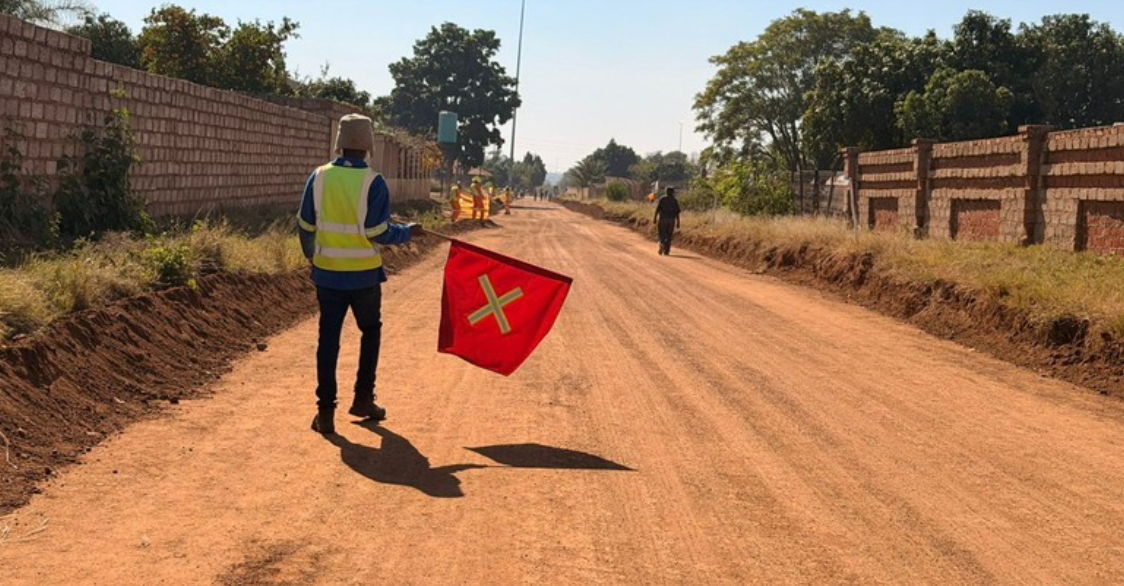
That afternoon, we set off for the camp, leaving at about 17:00. The first 20 km of the trip was on an old tarred road. Just as it became dark, we got to an unpaved road that would take us to the camp. The term ‘unpaved’ can hardly describe the road – it was muddy, had pools of water and mud all along the way and was incredibly undulating. In the darkness, unlike in this country, there was no sign of small animals in the headlights, no rabbits, meerkats, gennets, birds, moths . . . nothing. I later found out that, in the savannah grassland (as opposed to the forest jungle), all the animals had been consumed for protein.
We travelled for many kilometres. Every so often, we would pass a village of no more than five or six houses, each marked by the light of a solitary paraffin lamp. I later found out that none of the villages had an electricity supply, save for a petrol genset which was operated intermittently to supply a DStv decoder and a television set to watch football matches.
The whole country cries out for electricity and it would be so easy to do this using aerial bundle conductor and medium- voltage distribution. The challenge is to get people to pay for it. Oddly, in the main town, residents were happy to pay for diesel fuel and gene- rators, all of which costs an order of magnitude more than electricity supply – but it was also obvious that the reason for the lack of municipal supply was a lack of maintenance, and the town’s residents would rather have the security of their own genset.
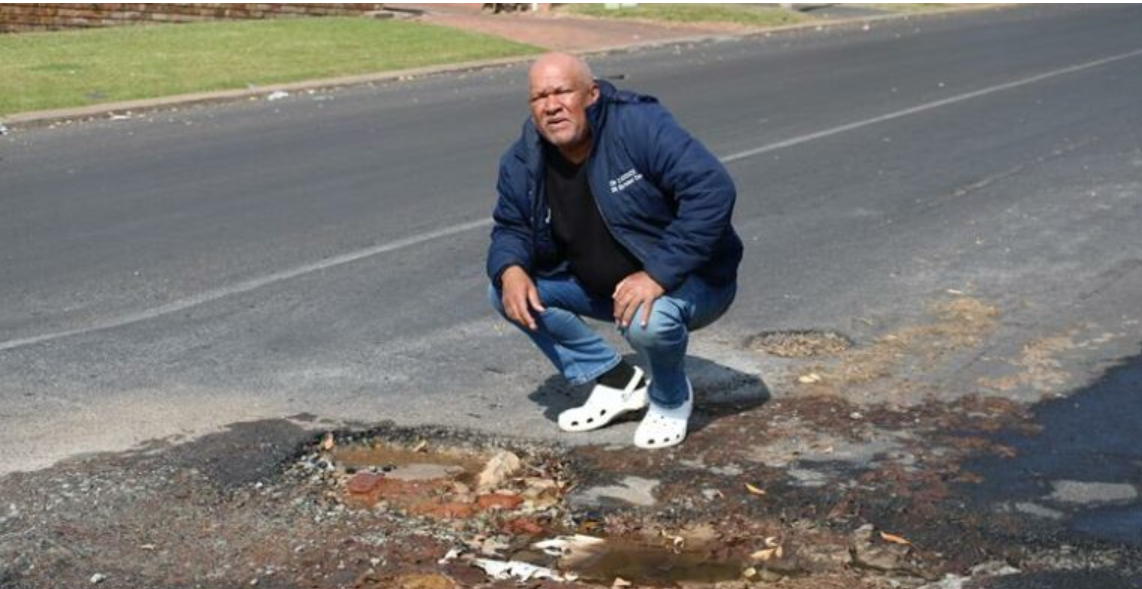
The reason for no supply to the villagers was a lack of will by the country’s government to either install electricity infrastructure or accept the fact that recovery of income from electricity sales would be low. There is no excuse for the terrible road. A team with a grader would have it sorted in a week – it seemed that the authorities just did not care.
I thought – for how long, Africa? By 2012, we can say with certainty that colonial days are long past. We can no longer excuse emerging governments with thoughts that they are innocent and will learn. They have had plenty of time to become experienced in what they do. All these countries are the same: terrible roads, poor infrastructure and minimal progress. Grief! A solar panel and two lights in a village would change things so much! But they do nothing. It’s time they did.
Recent News
Here are recent news articles from the Building and Construction Industry.
Have you signed up for your free copy yet?